Museum Catharijneconvent in an hour
Utrecht, Netherlands
A former convent beside a Utrecht canal holds centuries of Dutch religious art: manuscripts, altarpieces, silver and robes. An hour here means choosing a few rooms and seeing them well.
- About an hour
- Paid entry; some reductions
- First: The medieval manuscripts and altarpieces
Same room: Museum Speelklok · Rietveld Schröder House
When the doors are free · Every label in one list
Best months Autumn and winter · Getting there Walk from the Dom along the canals · Bring Reading glasses for the manuscripts
Museum Catharijneconvent tells the story of Christianity in the Netherlands, from the first missionaries to the present, through the objects it left behind. That is a big subject for a museum this size, and it is laid out across the rooms of an old convent beside the Nieuwegracht, one of Utrecht's quietest canals. The collection is rich enough to fill a day. An hour means choosing.
The choice is easier than it looks. The museum's real strength is medieval art: illuminated manuscripts, painted panels, carved wooden saints and the gold and silver of the old church. Utrecht was the religious centre of the northern Netherlands for centuries, and a great deal of what survived from that world has ended up here.
Do not try to follow the whole timeline. The museum is generous with context, and its later rooms are full of interest, but the medieval pieces are the ones you will not easily see elsewhere. Give them the first half of your hour and let the rest be a lighter walk.
A convent by the Nieuwegracht
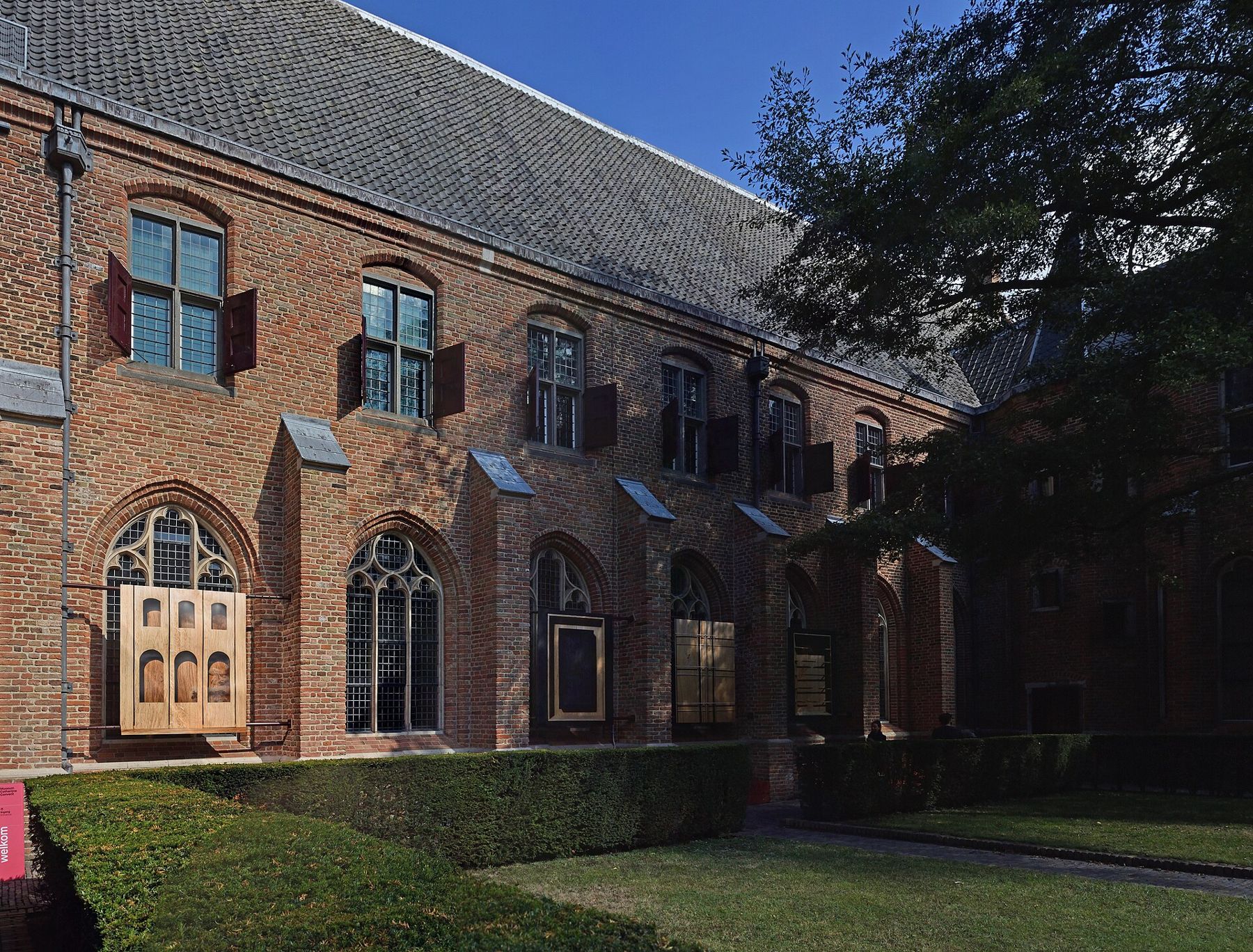
The buildings are part of the reason to come. They belonged to a convent of the Knights of Saint John, and parts date back to the late Middle Ages: long brick wings with tall windows, red shutters and steep tiled roofs around a garden courtyard. The museum has kept the feeling of the place, with old rooms and vaulted spaces alongside newer galleries.
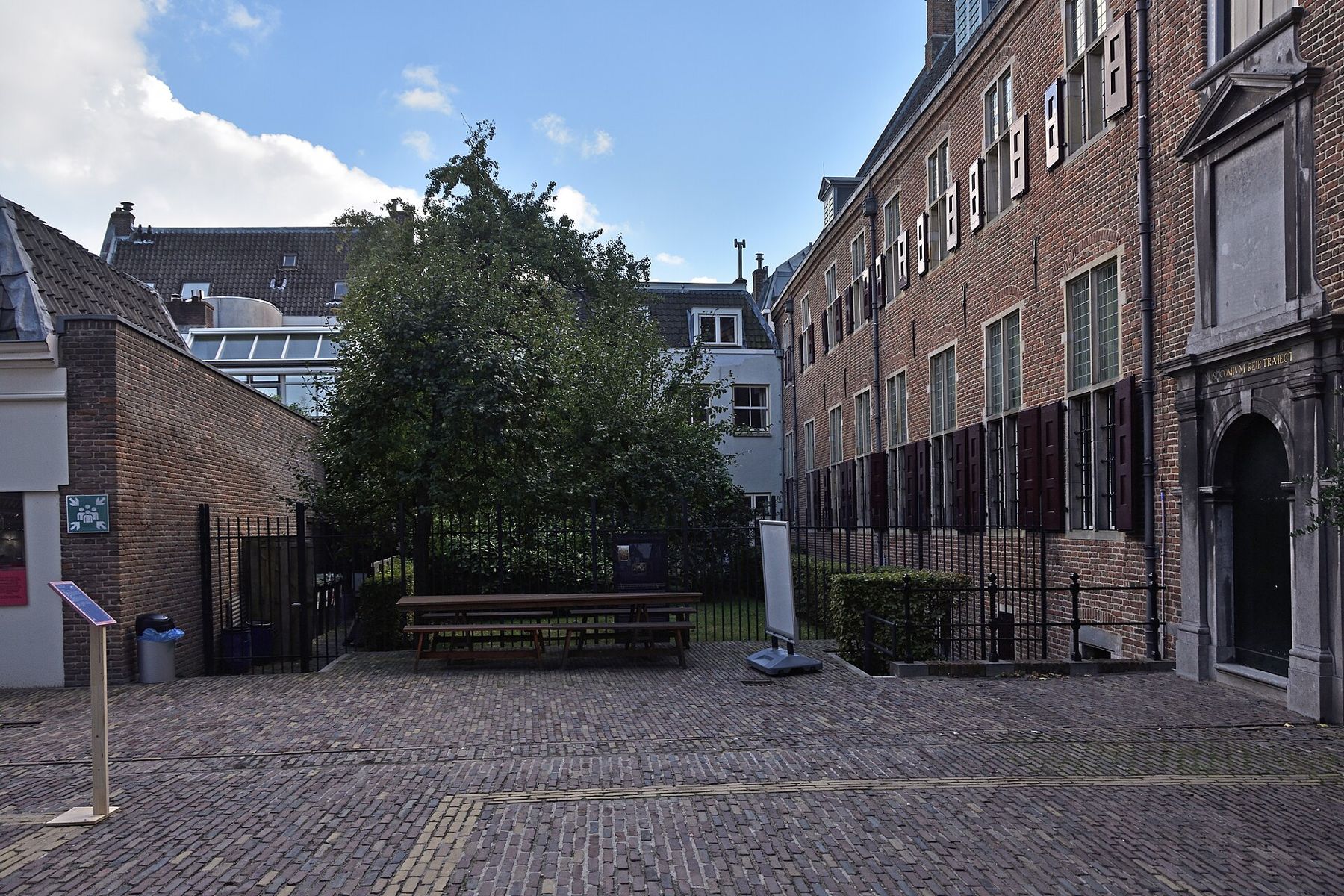
Before going in, walk a short way along the Nieuwegracht itself. The canal is lined with trees and old houses, and the water sits low between brick quays. It is one of the best walks in the city and sets the tone for an hour of slow looking.
Start with the Middle Ages
Head first for the medieval rooms. Here are the painted altarpieces and panels, the wooden sculptures of saints with traces of their original colour, and the cases of illuminated manuscripts, many of them made in or near Utrecht. The manuscripts are small and demand close attention; bring reading glasses if you need them, and give them time.
Look at the faces and hands in the carvings. Many were made for churches that were later stripped, and the fact that they survived at all is part of their story.
No. 08 · Next roomMuseum Mayer van den BerghAntwerp, Belgium · About an hourWhen the images came down
The museum does not shy away from the break that came in the 16th century. During the Reformation, waves of iconoclasm swept through the Low Countries, and churches were stripped of statues, altarpieces and paintings. In the northern Netherlands, Catholic worship was pushed out of public view for a long time afterwards, and many Catholics met in hidden churches inside ordinary houses.
A few objects here show the damage directly: statues with faces struck off, panels scraped or cut. They are hard to forget and worth a few minutes. They also explain why so much medieval Dutch religious art is gone, and why what remains is precious.
Later rooms follow the different churches that grew up afterwards, Catholic and Protestant, and the art each made: plain Protestant church interiors, Catholic devotional paintings, prayer books and Bibles. This part is rich but dense. For an hour, choose one or two cases rather than reading every wall.
Silver, robes and treasures to pick from
The museum holds a remarkable store of church silver and liturgical robes: chalices, reliquaries, monstrances and embroidered vestments heavy with gold thread. These are the most dazzling objects in the building and the easiest to rush past. Pick one robe and look at the embroidery up close: the stitched saints and scenes are tiny paintings in thread.
A good shape for the hour:
- Twenty minutes in the medieval rooms, with the manuscripts and altarpieces.
- Ten minutes on the Reformation and the damaged images.
- Fifteen minutes with the silver and the robes.
- Ten minutes in the courtyard garden and on one later room of your choice.
- Five minutes in the church next door, if it is open.
What you can leave: the temporary exhibition if it does not draw you, the longer historical overviews and most of the 19th-century material, which is interesting but less distinctive.
The garden and the church next door
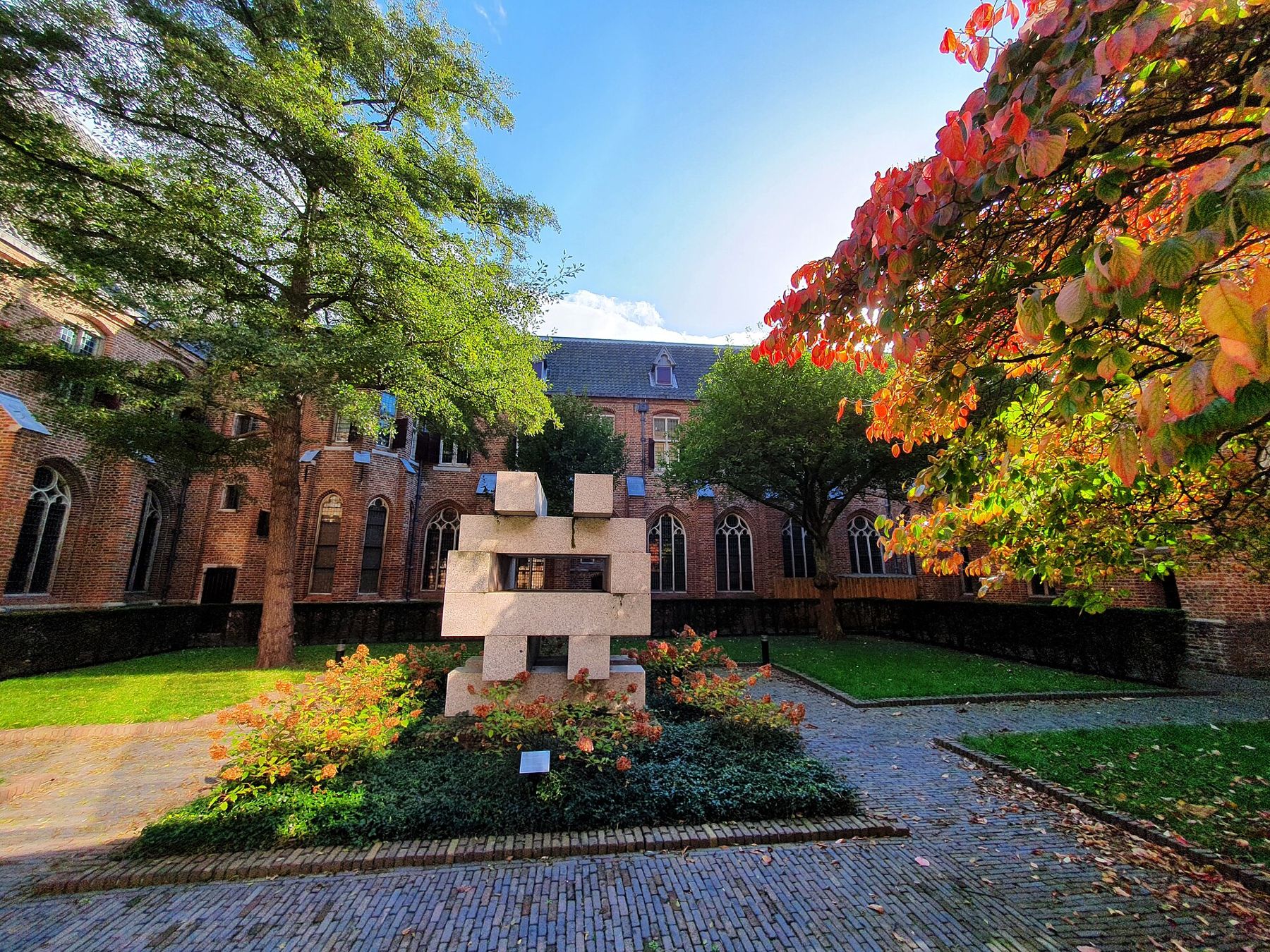
The convent garden, surrounded by the old brick wings, is a calm place to end the visit. A stone sculpture stands among the planting, and in autumn the trees turn the courtyard red and gold.
Next door stands the Catharijnekerk, the church that gave the convent its name, now Utrecht's Catholic cathedral. It is a different experience from the museum: a working church, not a display. If it is open when you finish, step inside for a few minutes, and keep in mind that services take priority over visitors.
Canal walks and other Utrecht rooms
Entry is paid, with reductions for some visitors and museum passes usually accepted. Opening days and times change, so check before you go. The museum is quieter on weekday mornings, and the Nieuwegracht is at its best on a still day in autumn.
From the museum it is a short walk along the canals to the Dom Tower and the old centre. Nearby, Museum Speelklok fills another medieval church, the Buurkerk, with musical clocks and street organs, a cheerful counterpoint to an hour of saints. For something completely different, the Rietveld Schröder House shows Utrecht's modern side, a family home built in 1924 that still looks like the future.