An hour in the Wallace Collection
London, England
Hertford House on Manchester Square holds paintings, porcelain, furniture and armour enough for a day. With one hour, choose: a short route through the rooms that matter most.
- One hour, chosen carefully
- Permanent collection free; exhibitions may charge
- First: The Swing in the Small Drawing Room
Same room: Sir John Soane's Museum · Charles Dickens Museum
When the doors are free · Every label in one list
Best months Any month, weekday mornings · Getting there Walk from Bond Street or Baker Street · Bring A short list and comfortable shoes
The Wallace Collection is not small. It fills a large town house, Hertford House, on the north side of Manchester Square, with more than twenty galleries of old master paintings, French furniture, Sèvres porcelain and one of the best collections of arms and armour in Britain. It was gathered over the nineteenth century by the Marquesses of Hertford and by Sir Richard Wallace, and in 1897 Wallace's widow left it to the nation. It opened as a museum in 1900, and under the terms of the bequest nothing can be added to it or lent out of it.
Much of the buying was done by the fourth Marquess, who lived mostly in Paris and bought French art of the previous century on a grand scale. Richard Wallace, widely believed to be his son, inherited the collection and brought much of it to London. In Paris his name survives on the green cast-iron drinking fountains he gave the city, which still stand on many street corners there.
That makes it a fixed world, and a generous one, but in an hour you cannot see it all. The trick is to choose three or four things and walk straight to them.
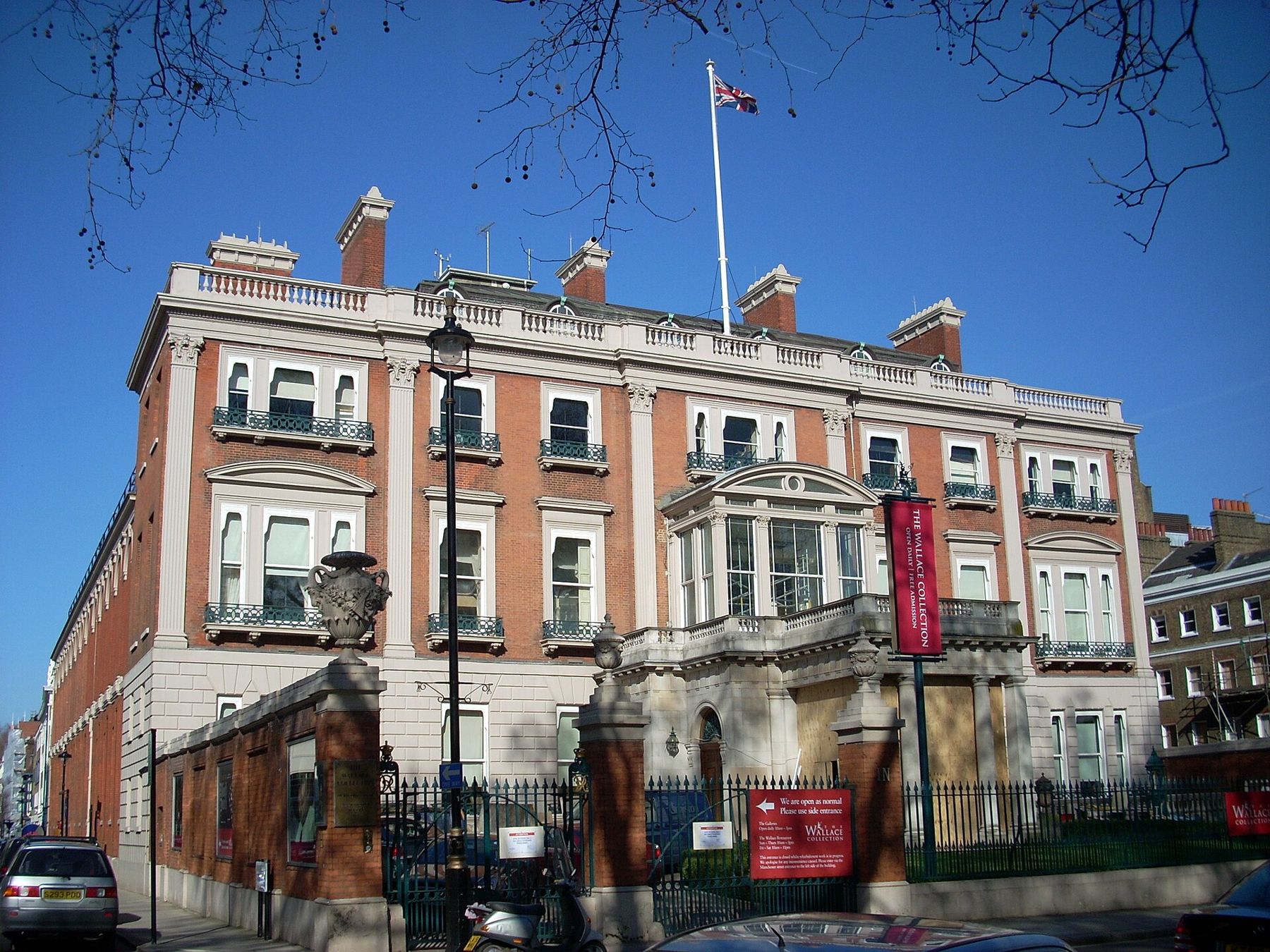
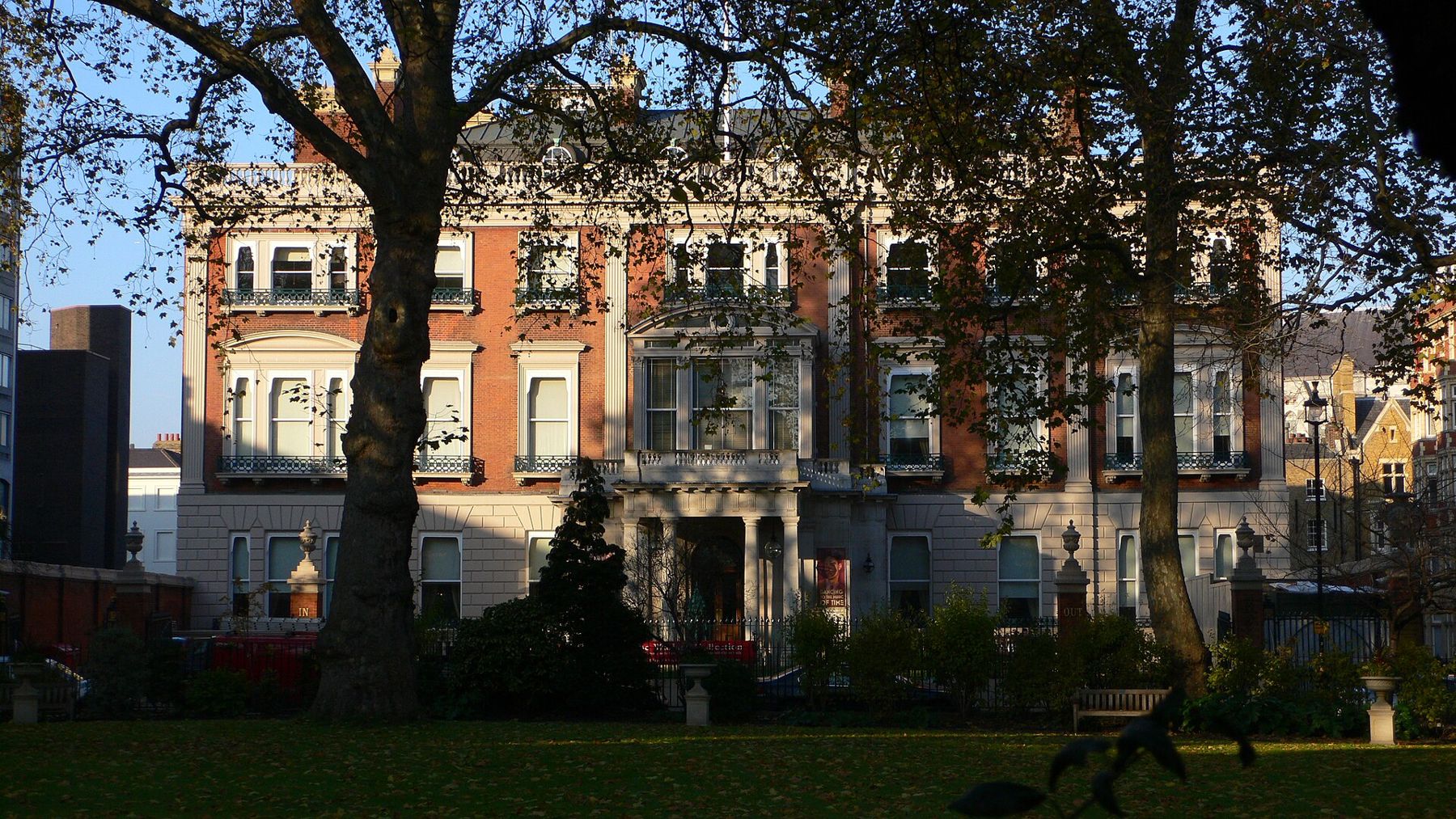
Manchester Square and the front of Hertford House
Manchester Square is a quiet garden square a few minutes north of Oxford Street. The house sits across its north side, brick and stone, with a porch and railings. The garden in the middle is private, but you can walk round it and see the house through the trees, which is the best way to understand its size.
Inside, the central courtyard has been roofed over in glass. Use it as a meeting point and a landmark: the galleries run round it on two floors, and it is easy to lose your bearings among so many similar rooms.
Three paintings worth the whole hour
Go first to Jean-Honoré Fragonard's The Swing. A young woman in a pink dress flies up from a swing in an overgrown garden, kicking off a shoe, while a young man hidden in the bushes below looks up. It is small, frothy and very clever, and it repays five full minutes. Around it hang paintings by Watteau, Boucher and other French artists of the eighteenth century, which the Hertfords collected in depth when they were out of fashion.
Then find Frans Hals's The Laughing Cavalier, dated 1624. He is not laughing, more smiling to himself, and the painting's fame comes from the sleeve: the embroidery of arrows, bees and love knots is painted with astonishing speed and confidence. Stand close, then step back. Hals painted quickly, in loose strokes that hold together only at a distance, and the change as you move is part of the pleasure.
Your third choice depends on taste. Titian's Perseus and Andromeda, Velázquez's portrait of a lady with a fan, Rembrandt's portrait of his son Titus, and Poussin's A Dance to the Music of Time all hang in the house. The Great Gallery upstairs holds many of the largest pictures and can be taken in quickly as a whole. It is a long, top-lit room hung densely in the old manner, with views of Venice by Canaletto and Guardi among the portraits and landscapes. Walk its length once, slowly, and stop only where something holds you.
No. 01 · Next roomSir John Soane's MuseumLondon, England · About an hourThe armoury downstairs
Even visitors with no interest in weapons tend to be held by the armoury. Full suits of armour, some for horse and rider, stand in long galleries alongside swords, shields, helmets and firearms from Europe, North Africa, the Middle East and Asia. The workmanship is the point: etched, gilded and engraved steel, made for display as much as for battle. Give it ten minutes and pick one or two pieces to look at closely rather than walking the length of every case. The armour for horses is often the most surprising, built to fit the shape of the animal's head and chest as closely as a suit fits a man.
A route through the rooms
- Ten minutes outside and in the covered courtyard, getting your bearings.
- Fifteen minutes upstairs with the French paintings and The Swing.
- Ten minutes with The Laughing Cavalier and the Great Gallery.
- Ten minutes on your own third choice.
- Ten minutes in the armoury.
- Five minutes in one of the porcelain and furniture rooms on the way out.
What you can leave: whole rooms of snuffboxes, miniatures and gold boxes are superb but tiring in a short visit. Keep them for another day, and the same goes for the long runs of Sèvres if porcelain is not your passion. The furniture, much of it made for French royal and noble houses, rewards a slower visit too: cabinets, desks and commodes set with gilt bronze and inlay, best seen when you have time to look at the joins and the metalwork.
Free rooms, busy days
The permanent collection is free, and temporary exhibitions may charge. Opening arrangements change, so check before you go. Weekday mornings are usually the quietest. Weekends bring families and shoppers in from Oxford Street, and the most famous rooms can fill.
The house is large but on a domestic scale; visitors with limited mobility should check access ahead. Bags may be checked at the entrance, and rules on photography in exhibitions vary.
A collection fixed as it was left
Because nothing can leave or join the collection, the Wallace is closer in spirit to a house museum than a national gallery. The same rule shapes Sir John Soane's Museum across town, where a collector's arrangement was frozen by law, and the Musée Nissim de Camondo in Paris, where a single collector's French furniture and porcelain stay where he placed them. If you like the Wallace's French rooms, Camondo is the natural next step.