Musée de la Vie romantique below Montmartre
Paris, France
Ary Scheffer's house and studios at the end of a cobbled lane in the 9th arrondissement, where Chopin, George Sand and Delacroix once gathered. A small house, a garden, an easy hour.
- Under an hour
- Permanent collection free; exhibitions paid
- First: The George Sand rooms
Same room: Musée Nissim de Camondo · Musée Zadkine
When the doors are free · Every label in one list
Best months Late spring to early autumn · Getting there Walk from Blanche or Saint-Georges Métro · Bring Time to sit in the garden
The Musée de la Vie romantique is one of the smallest museums in Paris and one of the easiest to love. It occupies a house built in the early nineteenth century at the end of a cobbled lane off the rue Chaptal, in the quarter below Montmartre that was once called the Nouvelle Athènes. The painter Ary Scheffer, born in Dordrecht and settled in Paris, lived and worked here from 1830, and for decades his house and studios were a meeting place for artists, writers and musicians of the Romantic generation.
It is now a museum of the City of Paris, and it keeps the feeling of a private house. An hour is plenty, and you will probably want some of it outside.
Down the lane to Scheffer's door
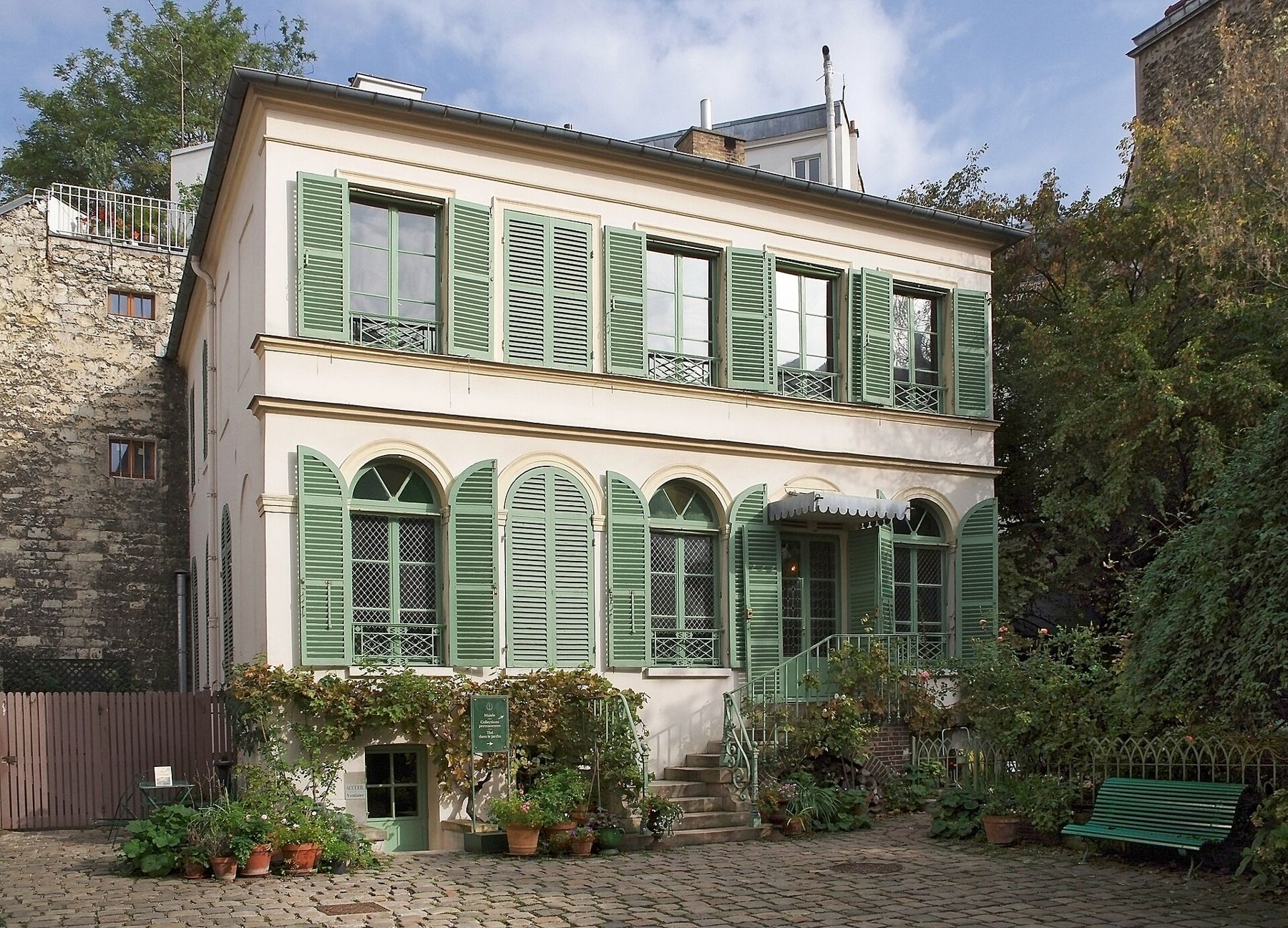
You reach the house through a gate and down a lane between high walls, with trees overhead. The noise of the city drops away within a few steps. At the end the courtyard opens up, and the house stands back from it, pale, two storeys high, with green shutters and a short flight of steps. On either side are the two studios Scheffer built for himself.
Pause in the courtyard. The house is not grand, and its modesty is part of its point: this was a working painter's home, where friends came in the evenings to talk, play music and look at pictures.
The neighbourhood was full of such households. Chopin and Sand lived for a time in the Square d'Orléans, a few streets to the east, and painters, actors and musicians took apartments throughout the new streets laid out on the slope below Montmartre. The museum is the best place to imagine that world, because so little of it is otherwise open to visitors.
Chopin, Sand and Delacroix in the salon
The guests included George Sand and Frédéric Chopin, Eugène Delacroix and Franz Liszt. Not all of them came often, and much of what is told about the salon has a soft focus, but the house was undoubtedly part of the Romantic world of Paris in the 1830s and 1840s.
Scheffer's niece Cornélie married the writer and historian Ernest Renan, and the house stayed with the family's descendants until it came to the city. The building is still sometimes called the Hôtel Scheffer-Renan.
No. 06 · Next roomMusée ZadkineParis, France · Under an hourGeorge Sand upstairs and down
The ground floor holds the rooms given over to George Sand. They are furnished with pieces from her family, portraits of her and her circle, jewellery, and small personal things, among them a cast of her arm and a cast of Chopin's hand. These objects can feel odd at first, but they say a great deal about how the Romantics kept their memories and their friendships. Sand, born Aurore Dupin, wrote under a man's name and lived with an independence that shocked many of her contemporaries, and the rooms give a sense of the person behind the reputation: a writer, a mother, a hostess and a loyal friend.
Upstairs are paintings by Scheffer himself, with portraits and the literary subjects he favoured, alongside works by artists of his circle. Scheffer is less famous now than many of his guests, and it is worth a few minutes to see why he was so admired in his own time. He painted subjects from Dante, Goethe and Byron, with pale, yearning figures and smooth surfaces, and his best known version of Francesca da Rimini, the doomed lovers drifting through the underworld, hangs in the Wallace Collection in London. Seeing his work in his own house, at the scale of the rooms he painted for, makes more sense of it than meeting it in a large gallery.
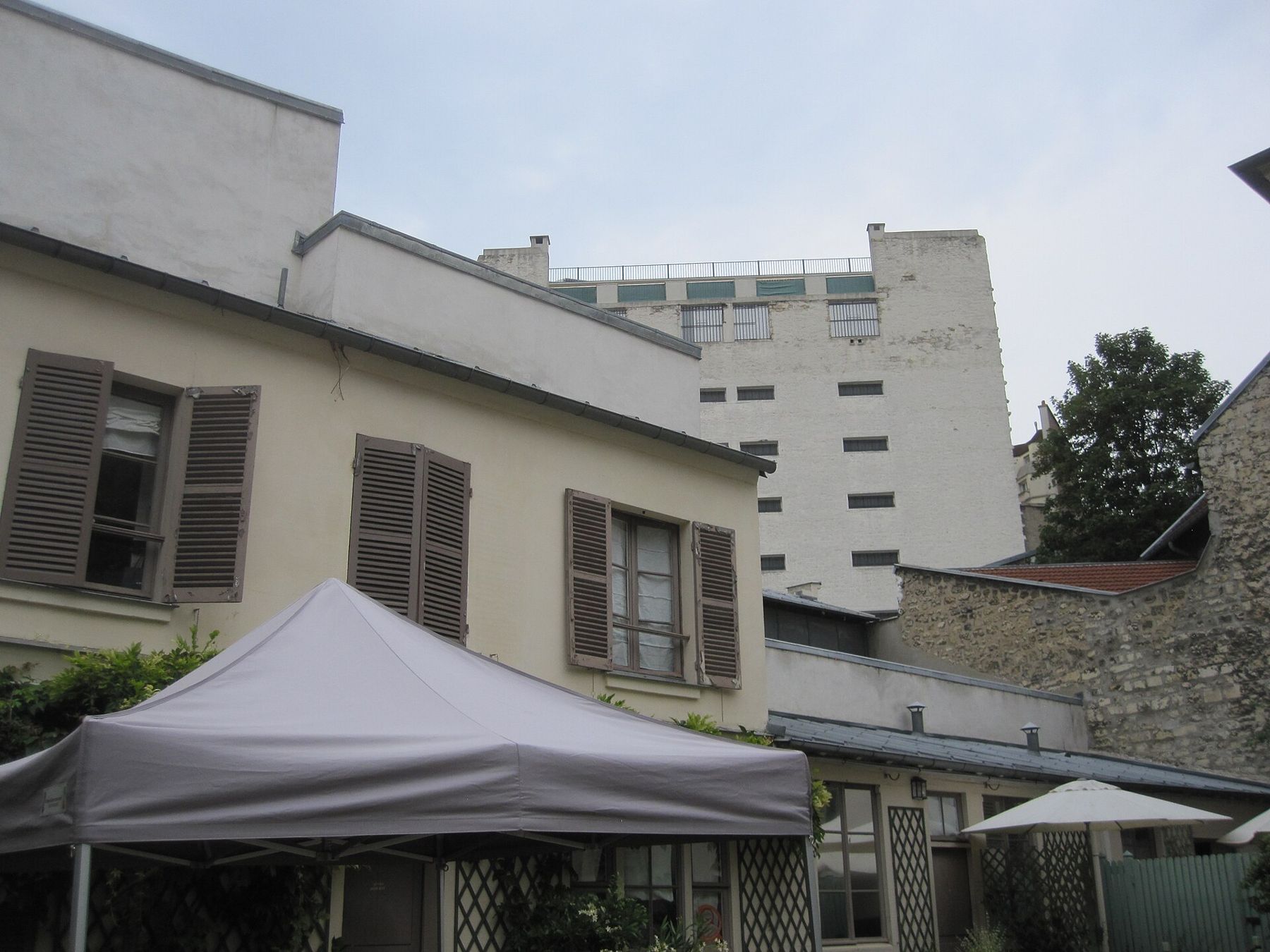
The studios across the courtyard are used for temporary exhibitions, usually on a theme linked to the nineteenth century. These are paid and vary in appeal, so look at what is on before deciding whether to add them to your hour.
The garden, the best room in the house
Behind and beside the house is a small garden with roses, lilacs and shady trees, and tables where you can sit. In spring and summer it is one of the most peaceful corners of the 9th arrondissement. Give it at least ten minutes, even if you are in a hurry. The garden has a seasonal place for refreshments, which can be busy on fine weekends.
Spending the hour
- Five minutes in the lane and courtyard.
- Fifteen minutes in the George Sand rooms on the ground floor.
- Fifteen minutes upstairs with Scheffer's paintings.
- Fifteen minutes in the garden.
- Ten minutes in the studios, if the exhibition appeals.
The permanent collection is free, as at the other museums run by the City of Paris, and temporary exhibitions are paid. Opening days and arrangements change, so check before you go. The house has stairs, and visitors with limited mobility should check access ahead.
The Nouvelle Athènes around it
The streets around the museum, between Saint-Georges and Pigalle, were built up in the early nineteenth century and attracted artists, actors and writers. Walk to the Place Saint-Georges, then up towards Montmartre. The Musée Gustave Moreau, the painter's house and studio, is a few streets away and pairs well with this visit.
For another artist's home in a Paris garden, the Musée Zadkine near the Luxembourg Gardens is just as small and calm. In Madrid, the Museo del Romanticismo covers the same period from a Spanish point of view.