Musée Zadkine, a sculptor's garden
Paris, France
The house and studio where Ossip Zadkine lived and worked for almost forty years, a few steps from the Luxembourg Gardens. Carved wood and stone inside, bronzes among the trees outside.
- Under an hour
- Permanent collection free; exhibitions may charge
- First: The main studio's wooden figures
Same room: Musée Nissim de Camondo · Musée de la Vie romantique
When the doors are free · Every label in one list
Best months April to October · Getting there Walk from Vavin or Notre-Dame-des-Champs · Bring An hour, then the Luxembourg Gardens
Ossip Zadkine was born in the Russian Empire in the late 1880s and settled in Paris around 1910, where he became one of the sculptors of the School of Paris. From 1928 until his death in 1967 he lived and worked in a small house with studios on the rue d'Assas, between the Luxembourg Gardens and Montparnasse. His widow, the painter Valentine Prax, left the house and its contents to the City of Paris, and it opened as a museum in 1982.
It is a quiet, compact place: a few rooms, two studios and a garden. An hour is enough to see it well, and you will leave knowing one artist properly rather than many by name.
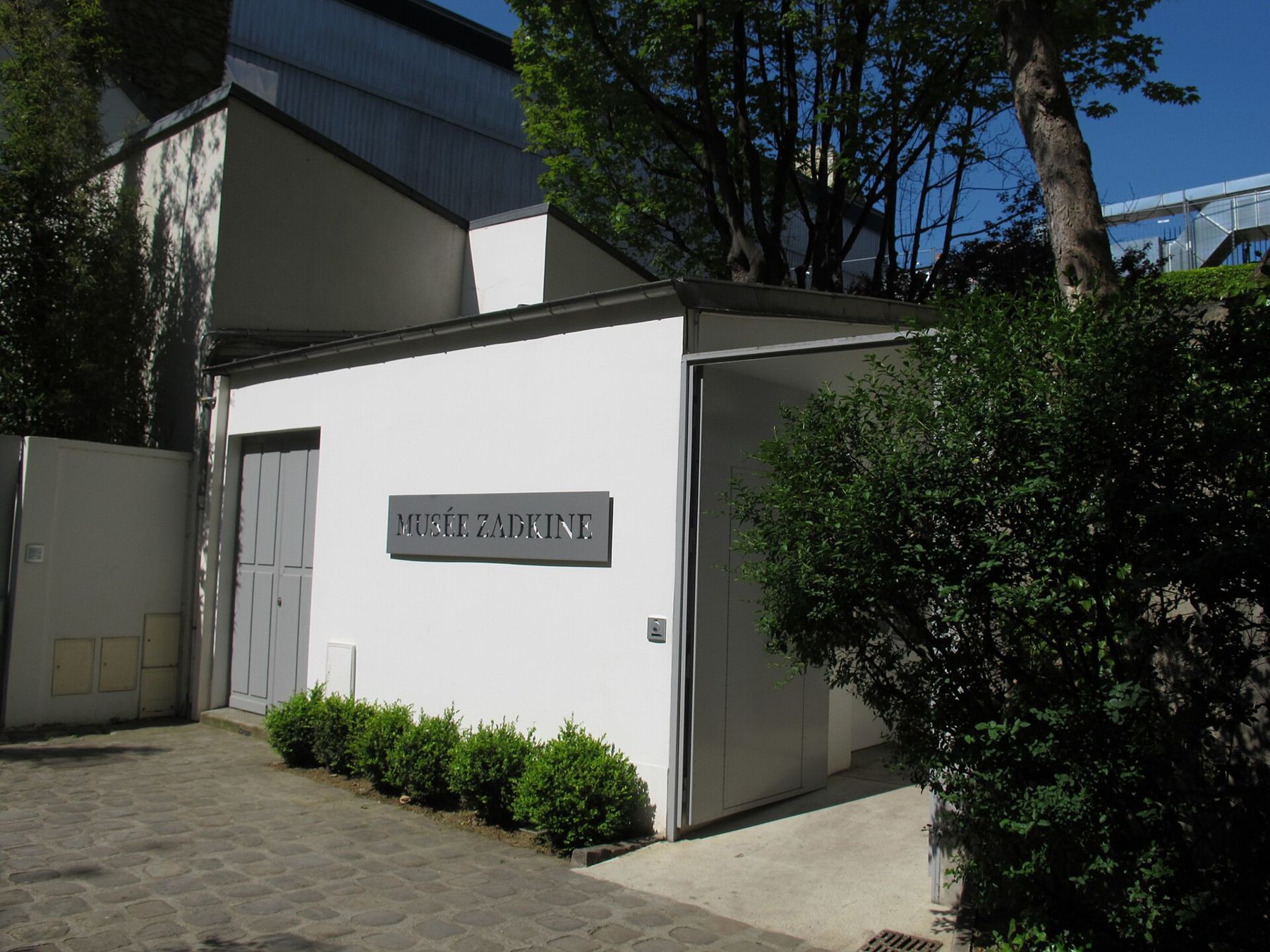
Through the gate on the rue d'Assas
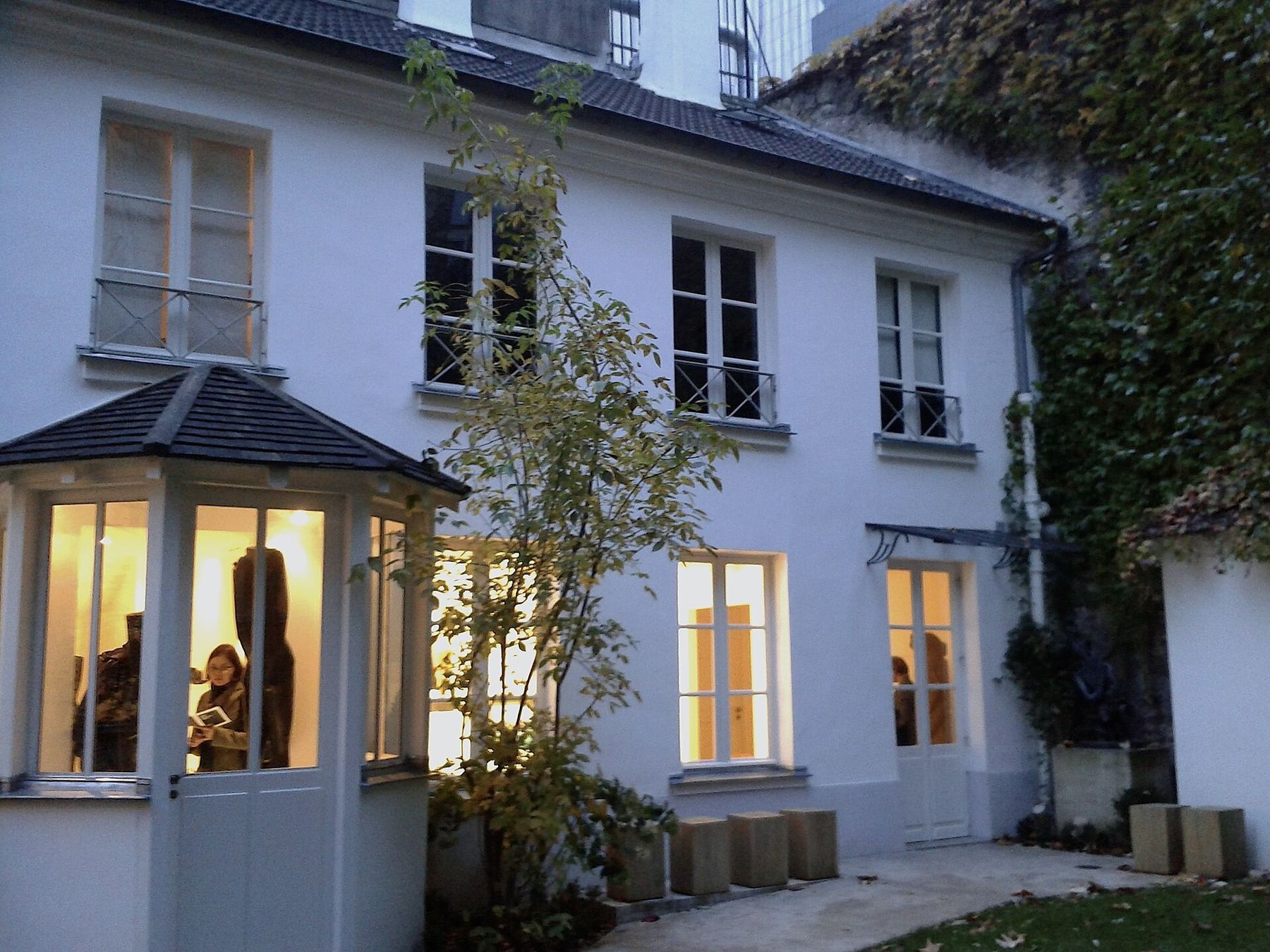
The entrance is easy to miss, a gate and a short passage off a busy street. At the end you come into a courtyard with a low white house, tall windows and ivy on the walls. It feels like a small country house that has wandered into the city.
Inside, the rooms are white and simply lit. The museum was renovated some years ago with a light hand, so the sense of a working studio remains.
Wood first, then stone
Zadkine's early reputation came from direct carving. Rather than modelling in clay and casting, he cut straight into wood and stone, following the grain or the block. The tall figures in elm, pear and other woods are the core of the museum, and the best place to start. Look at how the shape of each trunk decides the shape of the figure, and at the tool marks left on the surface.
The stone pieces are often more compact and closed, with heads and torsos that keep the weight of the block. Together the wood and stone carvings show a sculptor who was influenced by Cubism but never quite belonged to it. His forms often stay close to the human figure, with long necks, folded arms and faces reduced to a few planes, and there is something gentle in them even when the shapes are hard.
The main studio is the room to linger in. The light comes in from high windows, as it did when Zadkine worked here, and the figures are spaced so that you can walk round them. Sculpture changes as you move, and a carved figure seen from behind or from the side often tells you more than the front.
The Destroyed City and the bronzes
Zadkine's best known public work is the monument in Rotterdam known as The Destroyed City, a figure with a hole torn through its body and arms raised to the sky, made in memory of the bombing of that city in 1940. The museum shows studies and models related to it, and they are worth time: the gesture is the same whether a figure is a few inches high or several metres.
No. 05 · Next roomMusée de la Vie romantiqueParis, France · Under an hourThe later bronzes are more open and angular, built of planes and gaps, with instruments, birds and mythological subjects. Several of them stand in the garden, where the light and the leaves change them through the day.
The garden among the bronzes
The garden is small, shaded, and set with sculptures between the trees and along the paths. It is one of the most peaceful places in this part of Paris. Walk round slowly, then sit for a few minutes. In spring the trees are light and the bronzes stand out; in summer the garden is deep green and cool.
Paintings and drawings by Valentine Prax are shown in the house, and they add a second voice to the visit. She and Zadkine lived here together for most of their lives, apart from the years of the Second World War, which Zadkine spent in the United States. Her paintings are quieter than his sculpture, often of figures and interiors, and they show the house from the inside, as a home rather than a workshop.
An hour at the house
- Five minutes in the courtyard and entrance.
- Twenty minutes with the wood and stone carvings.
- Ten minutes with the Rotterdam studies and later work.
- Fifteen minutes in the garden.
- Ten minutes for any temporary exhibition, if it appeals.
The permanent collection is free, like other museums run by the City of Paris, and temporary exhibitions may charge. Opening days and arrangements change, so check before you go. Space is tight, and groups can fill the rooms quickly, so weekday mornings are best. The garden paths are gravel and the house has steps, so check access ahead if you need to.
Between Montparnasse and the Luxembourg
The museum is a few minutes from the Luxembourg Gardens, which make the obvious next step: walk in by the gate on the rue d'Assas side and head for the Medici Fountain or the orchard and beehives in the south-west corner. In the other direction, Montparnasse and its cemetery hold the graves of many artists of Zadkine's generation, and Zadkine himself is buried there. The streets between, around the boulevard du Montparnasse, were the centre of the artists' quarter in the years when he arrived, and a slow walk down the rue d'Assas and the rue Notre-Dame-des-Champs follows his daily route.
For another artist's house and garden in Paris, the Musée de la Vie romantique below Montmartre makes a good pair. In Madrid, the Museo Sorolla is a painter's house and garden on the same intimate scale.