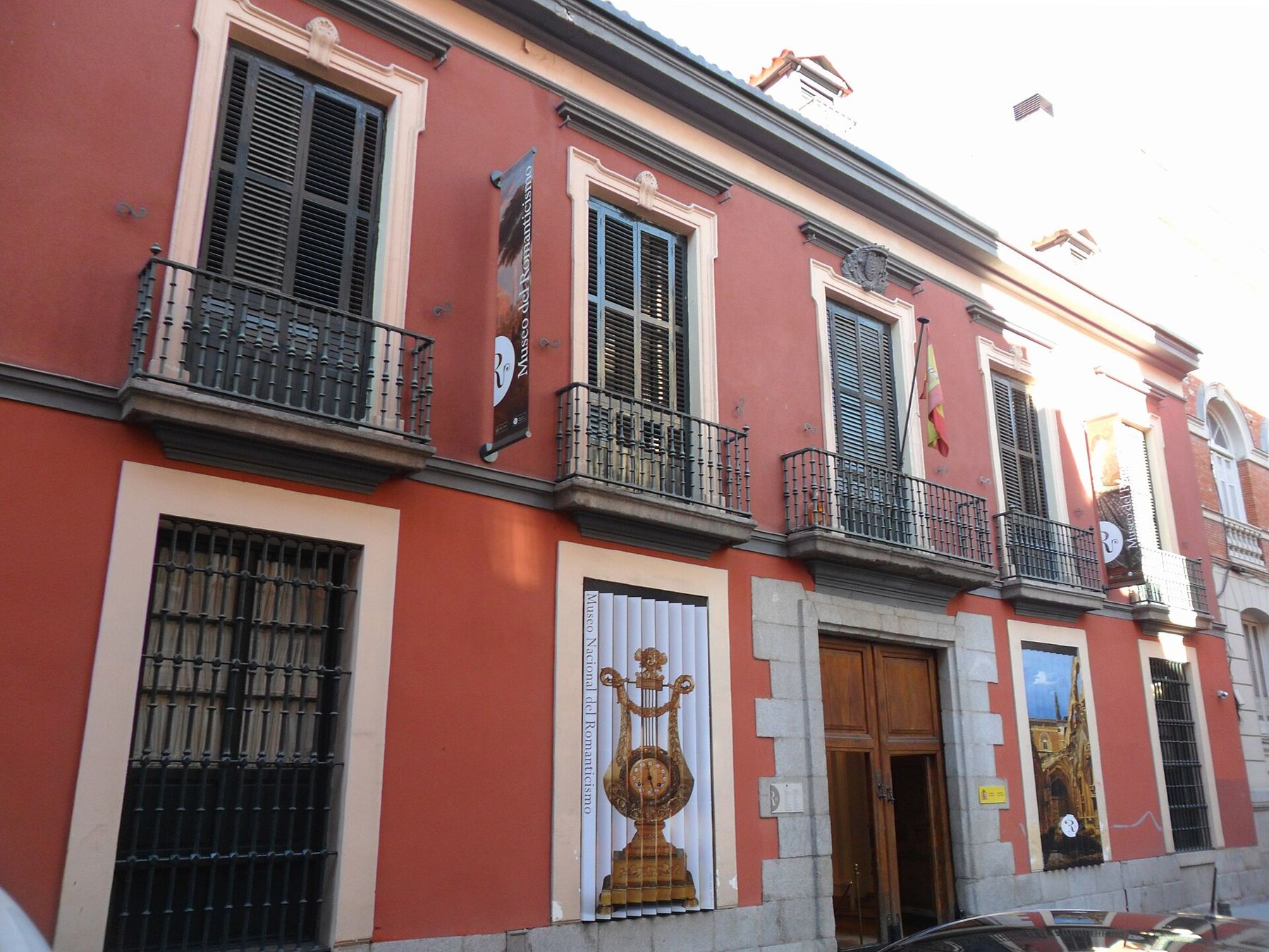
Museo del Romanticismo in Malasaña
Madrid, Spain
An 18th-century town house on the edge of Malasaña, furnished as a home of the Romantic era, with paintings, pianos, fans and a garden. An hour shows how Madrid lived around 1830.
- About an hour
- Some free hours; check before you go
- First: The ballroom
Same room: Museo Sorolla · Museo Cerralbo
When the doors are free · Every label in one list
Best months Spring and autumn · Getting there Metro to Tribunal, then a short walk · Bring Curiosity for small objects
The Museo del Romanticismo is a museum of a mood as much as a period. It sets out to show how a well-off family in Madrid lived in the first half of the 19th century: what hung on their walls, what they read, how they furnished a drawing room, what a child played with and what a young woman kept in her sewing box. The rooms are furnished as a house rather than laid out as galleries, and the effect is closer to a visit than a lesson.
The building is an 18th-century town house on Calle de San Mateo, on the edge of the Malasaña district. The museum began with the collection of the Marquis of la Vega-Inclán, who opened it in the 1920s, and it took its current name more recently. None of that background is needed to enjoy the rooms. You need an hour and a willingness to look at small things.
A house set for company
The visit runs through a sequence of rooms on the main floor, each furnished for a purpose: an entrance hall, drawing rooms, a dining room, a study, bedrooms, a chapel and the grand room at the centre. Furniture, carpets, clocks, mirrors and paintings are arranged together, so you see how a room was meant to work rather than a row of objects.
The house is at its best when you slow down. Look at the details: the painted ceilings, the lamps, the porcelain on the side tables, the music on the pianos. This is a museum where the labels matter less than the arrangement.
The ballroom and the drawing rooms
The ballroom is the room not to miss. It is the largest space in the house, with chandeliers, mirrors, a piano and chairs set around the walls, and it tells you most about the social life the rest of the house was built for. Romantic Madrid lived in rooms like this: evenings of music, poetry, cards and conversation.

The smaller drawing rooms around it are quieter and, for many visitors, more appealing. Some hold fans, sewing things and small portraits; others books, writing desks and a more sober feel. Together they say a good deal about how the day was divided in a house like this.
No. 04 · Next roomMusée Nissim de CamondoParis, France · About an hourPaintings worth a slower look
The paintings are by Spanish artists of the period, many of them portraits, and they are hung in the house as a family would have hung them. Among the earlier works is a painting of Saint Gregory the Great by Goya, which shows the Romantic era's debt to the painter who came just before it.
Look out too for the costumbrista pictures, scenes of Spanish everyday life and local types that were popular in the period: markets, festivals, majos and majas in their finery. They are the Romantic era's own picture of Spain, part real and part invention.
One small case holds a sadder object. The writer Mariano José de Larra, one of the great voices of Spanish Romanticism, took his own life in Madrid in 1837, and the museum keeps a pistol associated with him. It is displayed quietly, and it is a reminder that the Romantic mood had a dark side as well as a sentimental one.
Small objects, long stories
The museum's real riches are the small things: fans, gloves, snuff boxes, toys, valentines, jewellery made from hair, miniature portraits and keepsakes. They are easy to rush past and worth stopping for. Each is a scrap of somebody's life, kept because it meant something.
A sensible split for the hour:
- Ten minutes in the entrance rooms and the first drawing rooms.
- Fifteen minutes in the ballroom and the rooms opening off it.
- Fifteen minutes with the paintings and the cases of small objects.
- Ten minutes in the bedrooms, study and chapel.
- Ten minutes in the garden at the back.
What you can leave: the temporary exhibition if it does not appeal, and the longer wall texts on the history of Romanticism, which repeat what the rooms show better.
The garden behind the house
At the back of the house is a small garden with trees, a fountain and tables, and part of it is given over to a cafe run inside the museum. It is a good place to sit for ten minutes at the end, in the shade, away from the traffic of the streets outside. In spring it is at its best.
Even without stopping for a drink, step out and look back at the house from the garden. It gives you a sense of how these town houses were built, with the formal face on the street and a private world behind.
Malasaña around the corner
The museum stands a short walk from Tribunal metro station, on the eastern edge of Malasaña. Walk west and you reach the Plaza del Dos de Mayo, the heart of the district, named for the Madrid rising against Napoleon's troops in 1808. Malasaña's streets are narrow, lively and full of small shops and bars; it is a good neighbourhood to wander after an hour indoors.
If this house appeals, the other Madrid house museums make natural companions. The Museo Sorolla shows a painter's home a lifetime later, and the Museo Cerralbo near Plaza de España shows a collector's palace packed to the ceiling. In Paris, the Musée de la Vie romantique is a close relation, a different city's take on the same era.
Like other Spanish state museums, the Museo del Romanticismo has offered free entry at certain times; these change, so check before you go. It usually closes one day a week, and weekday mornings are the quietest.