Sir John Soane's Museum in one hour
London, England
An architect's house on Lincoln's Inn Fields, packed floor to skylight with casts, paintings and an Egyptian sarcophagus, kept as he left it. Free, small, and worth the wait on the pavement.
- About an hour
- Free; donations welcome, queues at busy times
- First: The Picture Room's folding walls
Same room: Charles Dickens Museum · The Wallace Collection
When the doors are free · Every label in one list
Best months Weekday mornings, any month · Getting there Short walk from Holborn station · Bring Patience for the queue, a small bag
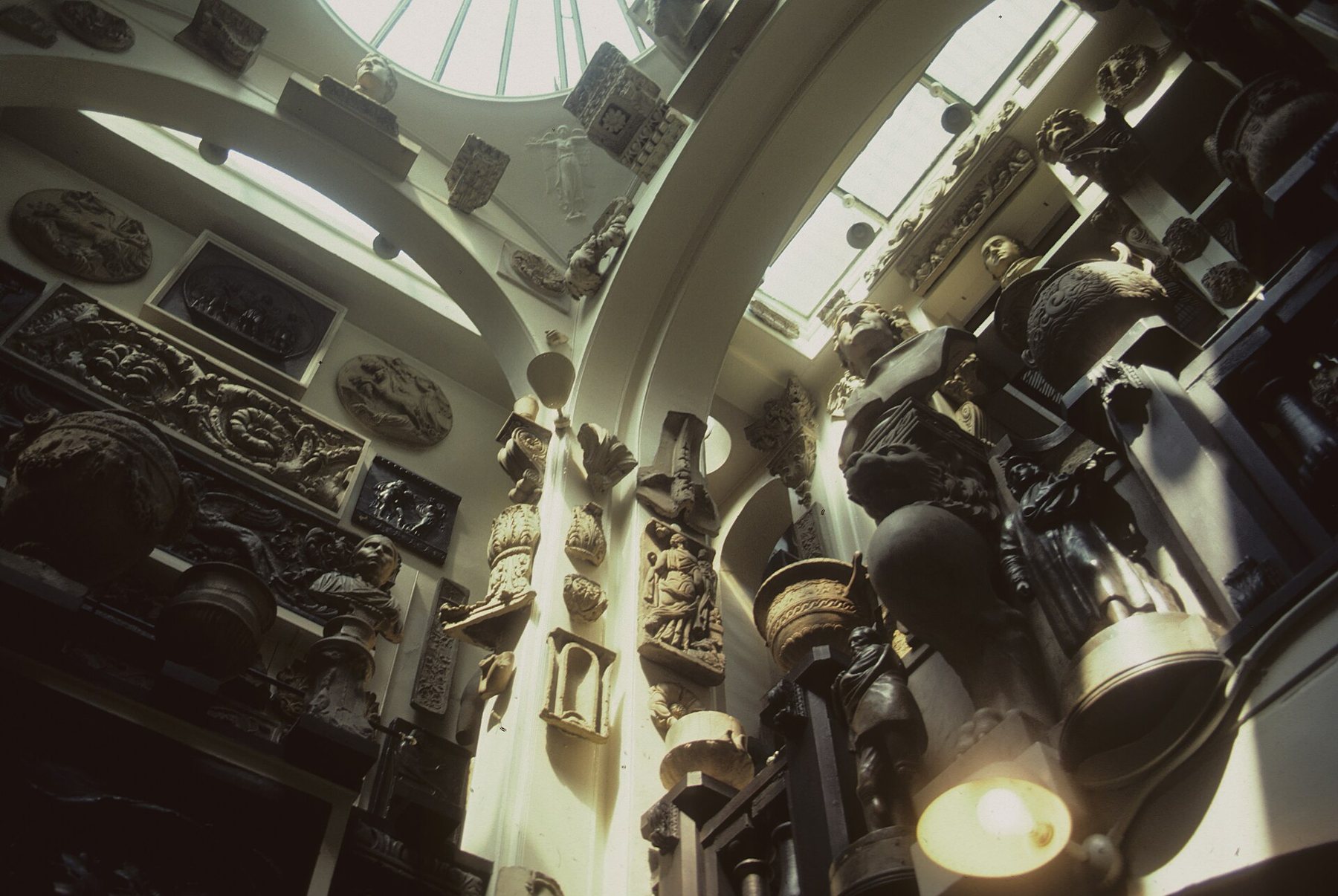
Sir John Soane was the architect of the Bank of England and a professor of architecture at the Royal Academy, and for most of his working life he treated his own home as a laboratory. He bought three neighbouring houses on the north side of Lincoln's Inn Fields, rebuilt them again and again, and filled them with everything a student of architecture might want to study: plaster casts, fragments of Roman buildings, paintings, drawings, models and books. In 1833 an Act of Parliament fixed the arrangement, and when Soane died in 1837 the house passed to the nation on the condition that it be kept as he left it. It still is, more or less, which is why a visit here feels less like a gallery and more like being let into someone's mind while they are out.
The result is small, dense and easy to underestimate. Rooms are narrow, stairs are tight, and the light comes from above, through domes, lanterns and coloured glass that Soane placed with great care. An hour is right: long enough to see the four or five things that matter, short enough that the crowding never wears you down.
Thirteen Lincoln's Inn Fields, seen from the square
Start outside. The middle house, number 13, has a projecting stone front, an open loggia that Soane added and later glazed. It looks odd beside its plain brick neighbours, and that is the point: Soane was showing the street what he could do. Lincoln's Inn Fields itself is one of the largest squares in London, with lawns, plane trees and benches, and it is the right place to wait if the queue is long or to sit for ten minutes afterwards and let the house settle.
Inside, staff will usually ask you to leave larger bags and to move quietly. Rules on photography, bags and numbers change from time to time, so check the museum's own notices on the day rather than assuming.
The Dome and the crowded heart of the house
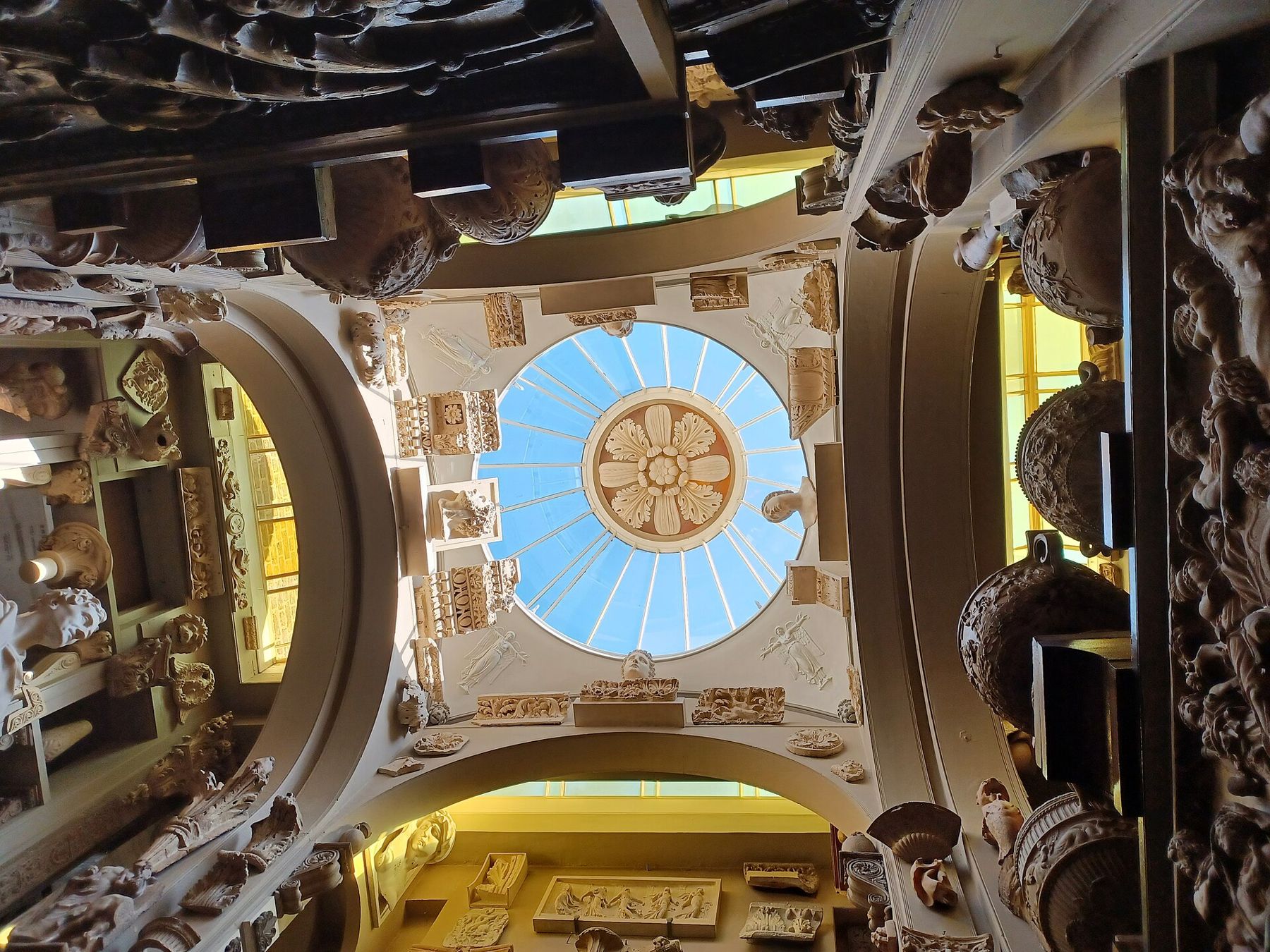
The first rooms on the ground floor, the dining room and library, are painted a deep red and lined with books and mirrors. They are handsome, but give them only a few minutes. The real house begins at the back, where Soane cut away floors to create a shaft of space running from the basement up to a glass dome. Stand under it and look up: every surface is covered with casts of capitals, friezes, urns and masks, stacked on brackets and ledges so that the walls almost disappear.
At the centre of this space is a marble bust of Soane himself, set above the rail so that he looks out over the collection. Below, through the rail, you can see down into the basement and the pale shape of the sarcophagus. It is the single best view in the house, and it explains the whole place in a few seconds: Soane wanted you to see fragments in relation to each other, across floors, in changing light.
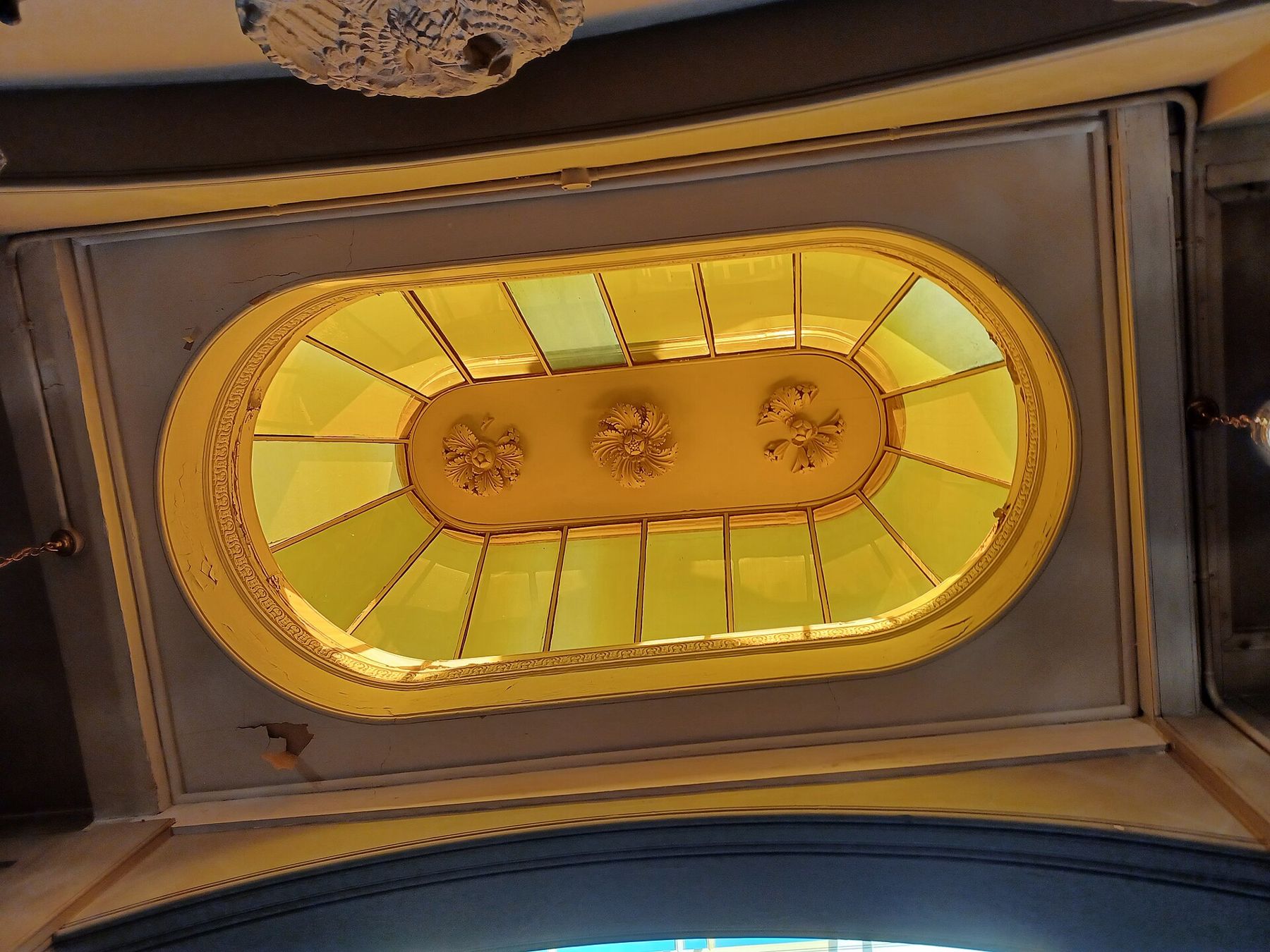
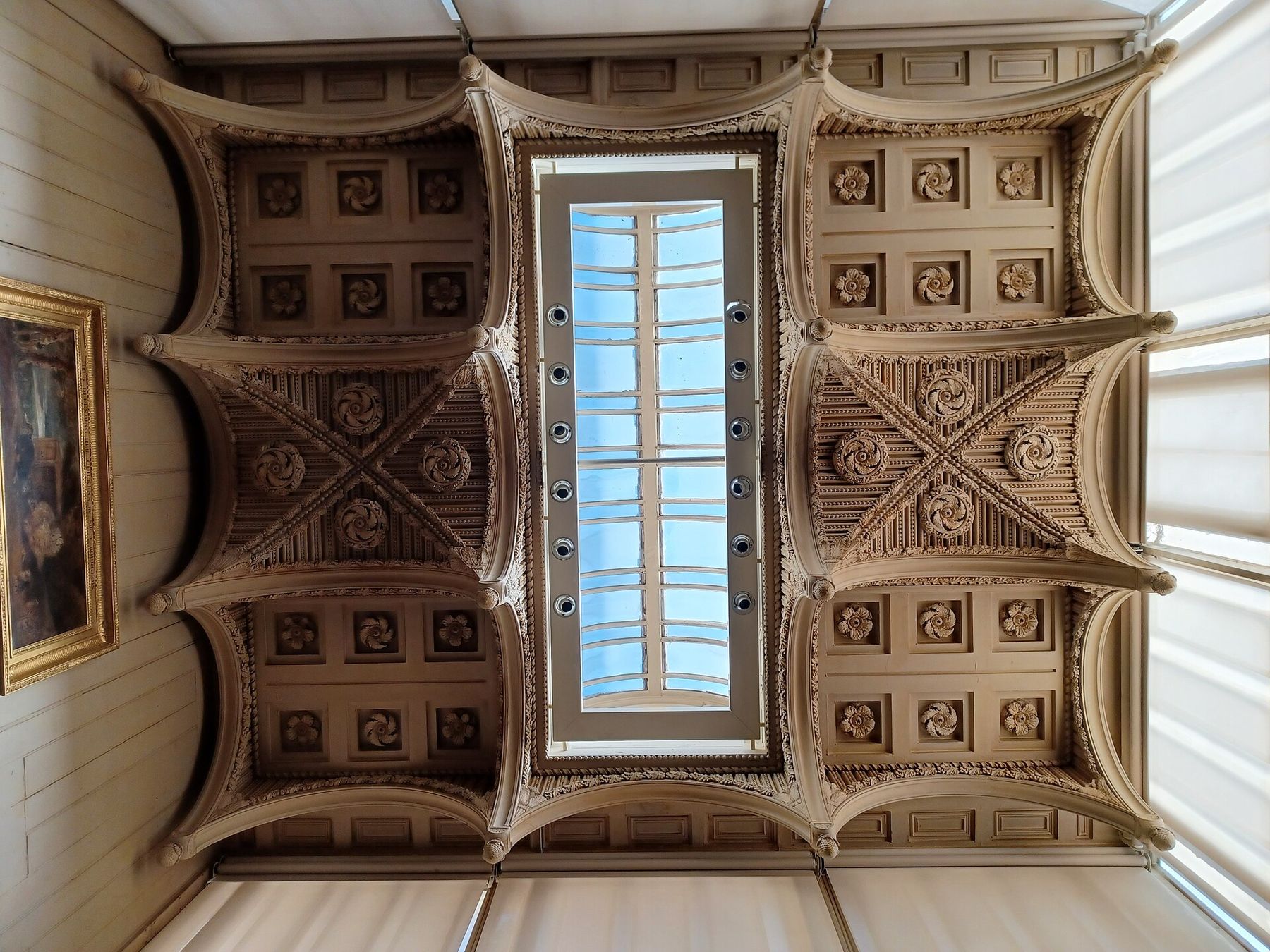
Near the dome, look for the small Breakfast Room, with its shallow canopy ceiling floating on slender supports and its convex mirrors set into the corners. Architects come here to study this room more than any other. It is easy to walk through without noticing, so stop, look up, and see how the light slips in around the edges of the ceiling.
Hogarth behind the folding walls
The Picture Room is tiny, and that is its trick. Soane hung the walls on hinges, in layers, so that a room barely bigger than a large cupboard could hold far more pictures than its walls allow. A member of staff opens the panels at intervals, and the moment they swing out is the high point of most visits. Wait for it if a demonstration is about to begin.
No. 11 · Next roomMuseo CerralboMadrid, Spain · About an hourA room barely bigger than a large cupboard turns out to hold a whole gallery.
The paintings to find are William Hogarth's two great series. A Rake's Progress follows a young heir through eight scenes, from inheritance to the madhouse, and An Election is a set of four rowdy, crowded scenes of a country election. Both are full of small jokes, so spend time with two or three scenes rather than skimming all of them. There are also views of Venice by Canaletto, and architectural drawings that show buildings Soane designed, some of them long since demolished.
A room barely bigger than a large cupboard turns out to hold a whole gallery. The same idea, of a collector arranging everything to be seen in one route, runs through the Wallace Collection on Manchester Square, though there the rooms are grand and the walls are fixed.
Seti the First's coffin in the basement
In 1824 Soane bought the alabaster sarcophagus of the pharaoh Seti the First, which had been brought from the Valley of the Kings and offered first to the British Museum. To celebrate its arrival he held evening parties lit by lamps and candles, and the house still feels built for that kind of light. The sarcophagus sits in the basement, in a space called the Sepulchral Chamber, and is carved inside and out with fine figures and text, once filled with blue pigment. The best way to see it is to walk slowly around it and look through the translucent stone where light falls on it.
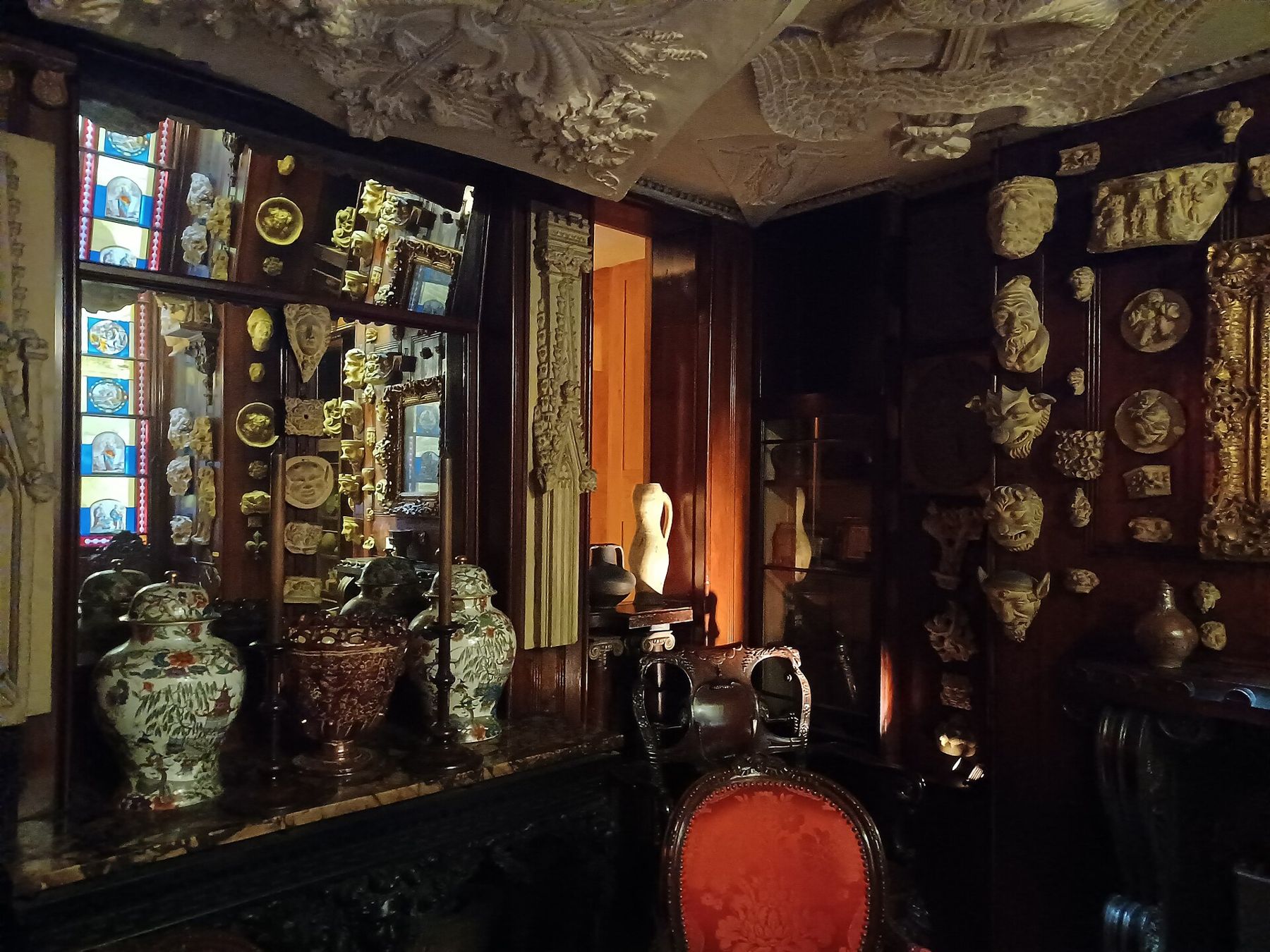
Around the basement are the Monk's Parlour and the Crypt, rooms Soane dressed as a joke medieval retreat, with Gothic fragments, dim light and a mock ruin in the yard outside. They are worth five minutes for the mood rather than for any single object.
How to spend the sixty minutes
An order that works on most days:
- Ten minutes in the square and at the front, while you wait.
- Five minutes in the red dining room and library, then straight to the back.
- Fifteen minutes under the Dome and in the Breakfast Room.
- Fifteen minutes in the Picture Room, timed for the opening of the panels.
- Ten minutes in the basement with the sarcophagus and the Monk's Parlour.
- Five minutes upstairs if the upper rooms are open, which depends on the day.
What you can leave: the drawing rooms upstairs are lighter, yellow and pleasant, but less singular, and the model room and private apartments are often visited only on separate tours with their own arrangements. If you love the place, come back for one of those another day.
Queues, narrow stairs and the right time to come
Because the house is small, the museum limits how many people are inside at once. On weekends and in school holidays the queue can stretch along the square. Weekday mornings are usually quieter, and an hour before closing can be calm as well. Times and arrangements change, so check before you go, and do not plan a visit for the last half hour of the day.
The stairs are steep and the passages narrow. Visitors with limited mobility should check access in advance, since some parts of the house are hard to reach. Children are welcome but need to be kept close, because almost everything is within reach and nothing is behind glass.
If this way of collecting appeals, the Charles Dickens Museum on Doughty Street is a short walk north through Bloomsbury and shows a very different kind of London house. In Paris, the Musée Nissim de Camondo is another home fixed in place by its owner's will, with a far sadder story behind it.