The Red Star Line Museum by the docks
Antwerp, Belgium
In the brick sheds where emigrants were checked before sailing for America, an Antwerp museum tells the story of leaving home, one passenger at a time, and ends with a view over the river.
- About an hour
- Check the museum's free hours
- First: The inspection and disinfection rooms
Same room: Plantin-Moretus Museum · Museum Mayer van den Bergh
When the doors are free · Every label in one list
Best months Autumn and winter weekdays · Getting there Walk or tram north to Eilandje · Bring Time to read, and a jacket for the tower
Antwerp sends most visitors to its painters and its cathedral. The Red Star Line Museum sends you the other way, up to the old docks north of the centre, to a row of brick sheds where hundreds of thousands of people spent their last hours in Europe. The shipping line ran passengers from Antwerp to North America from the 1870s until the 1930s, and these buildings were where many of them, mostly those travelling in the cheapest class, were washed, examined and cleared to sail.
The museum opened in the restored sheds in 2013. It is not large, and it is not a ship museum. It is a museum about people deciding to go, and it rewards an hour of slow reading more than a quick walk through.
Sheds that sorted the healthy from the sent-back
The reason these buildings exist is blunt. American immigration officers could refuse anyone they judged ill or unfit, and a refused passenger was carried back at the shipping company's cost. So the line checked its passengers before they boarded: their luggage was disinfected, their bodies were examined, and anyone who looked doubtful could be held back on the quay.
You walk the same route through the sheds. The spaces are plain, high and a little cold, and the museum has kept them that way rather than dressing them up. Read the panels about the medical checks slowly. They are the hinge of the whole place: the moment when a family that had sold almost everything to reach Antwerp found out whether the journey would go on.
Many of the people who came through here were Jewish families from Eastern Europe, leaving poverty and persecution, alongside farm labourers, craftsmen and young people from across the continent. The museum treats them as individuals, not as a flood, and that is its great strength.
Packing a life into a trunk
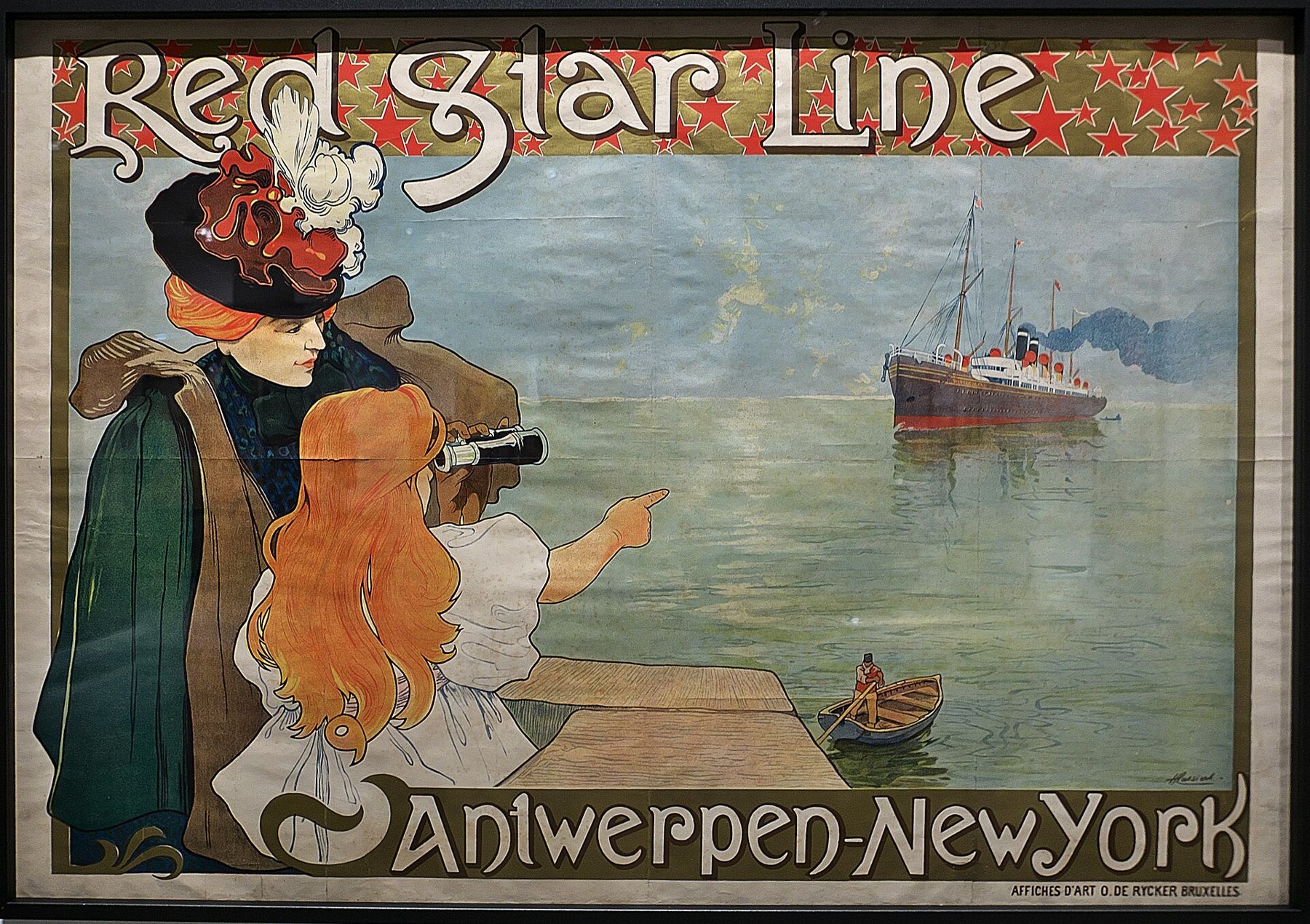
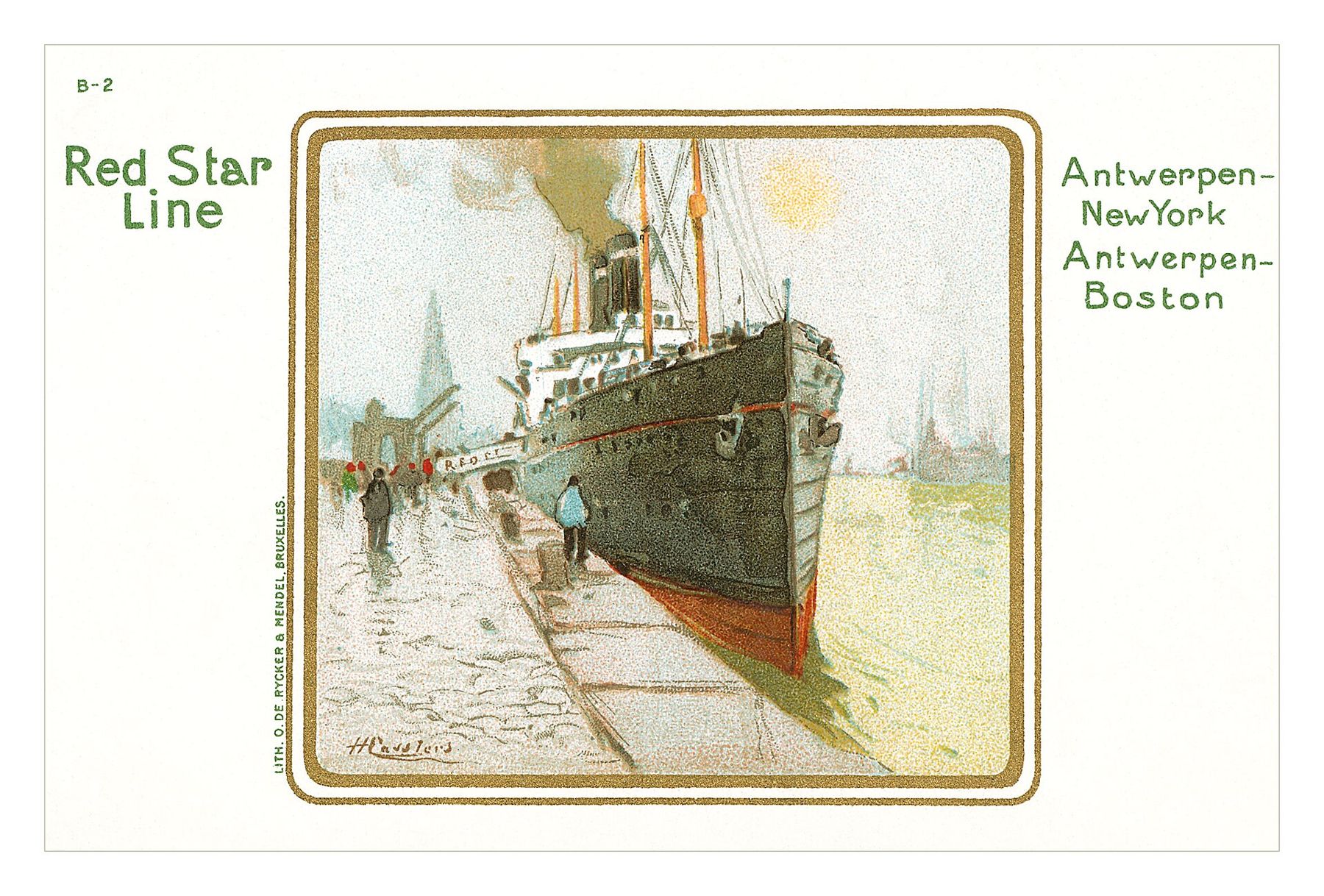
The first rooms deal with the decision itself and the long trip to the port. Train tickets, letters home, the kind of luggage people carried, the advertising that sold the dream of a new country: it is ordinary material, and it lands hard because it is ordinary. The line's posters, many of them drawn by the Antwerp-born artist Henri Cassiers, show elegant travellers and calm seas. They were selling a crossing that, for most passengers, looked nothing like the picture.
Look for the personal stories threaded through the displays. Each follows one traveller or one family, from the village they left to the life they built, or failed to build, on the far side. You do not need to read every one. Pick two or three and follow them through the building; the hour feels shorter and the place stays with you longer.
If you came to Antwerp for its older houses, the contrast is worth having. A morning at the printing house on the Vrijdagmarkt shows the city at its richest and most settled; this museum shows people leaving a Europe that had no room for them.
On board, and on the far side
The middle of the museum moves to the crossing. Displays give a sense of how differently the classes travelled, from cabins with linen to crowded steerage quarters below. Do not spend too long here; it is the most familiar part of any emigration story, and the sheds themselves say more.
No. 08 · Next roomMuseum Mayer van den BerghAntwerp, Belgium · About an hourThen comes arrival. The line sailed mainly to New York and Philadelphia, and from the 1890s passengers landing at New York faced a second inspection at Ellis Island. The museum is honest that some were turned back even after all the checks in Antwerp, and that the voyage did not end every family's difficulties. Some of the stories end in success, some in hardship, a few in tragedy. The tone is steady throughout, neither sentimental nor grim.
It is a museum about people deciding to go, and it rewards an hour of slow reading more than a quick walk through.
Where the hour goes
A sensible order runs like this:
- Ten minutes on the decision to leave and the journey to Antwerp.
- Twenty minutes in the inspection and disinfection rooms, reading properly.
- Ten minutes on board, quickly.
- Ten minutes on arrival and what came after.
- Ten minutes in the tower, looking out.
What you can leave: the longer audio and film pieces, unless one of the family stories has caught you, and the more general material on migration today, which is thoughtful but repeats points the older rooms make better.
The tower over the Scheldt
The museum added a new tower to the old sheds, and the view from the top is the right way to finish. You look out over the docks of the Eilandje district, the river Scheldt and the long line of the port running north. This is the water the liners left on, and after an hour of other people's departures it is a quiet place to stand.
On a windy day the tower is cold, so bring a layer. On a clear one you can pick out the tall red stone block of the MAS, the city's museum by the water, a short walk away.
Around the old docks
The Red Star Line Museum sits on the edge of the Eilandje, the old harbour quarter between the centre and the modern port. It is a fair walk from the Grote Markt along the river, or a short tram ride. Pair it with the MAS if you have the energy, or walk back through the docks and the old warehouses towards the centre.
Entry is paid for most visitors, with reductions for some groups, and the city's museums have at times offered free entry on certain days; arrangements change, so check before you go. Opening days vary too, and the museum may close one day a week. Weekday mornings outside school holidays are the calmest.
Antwerp's small museums suit a slow day. After the docks, the collector's rooms of the Museum Mayer van den Bergh make a good contrast, all private taste and quiet, the opposite of a crowded quayside a century ago.