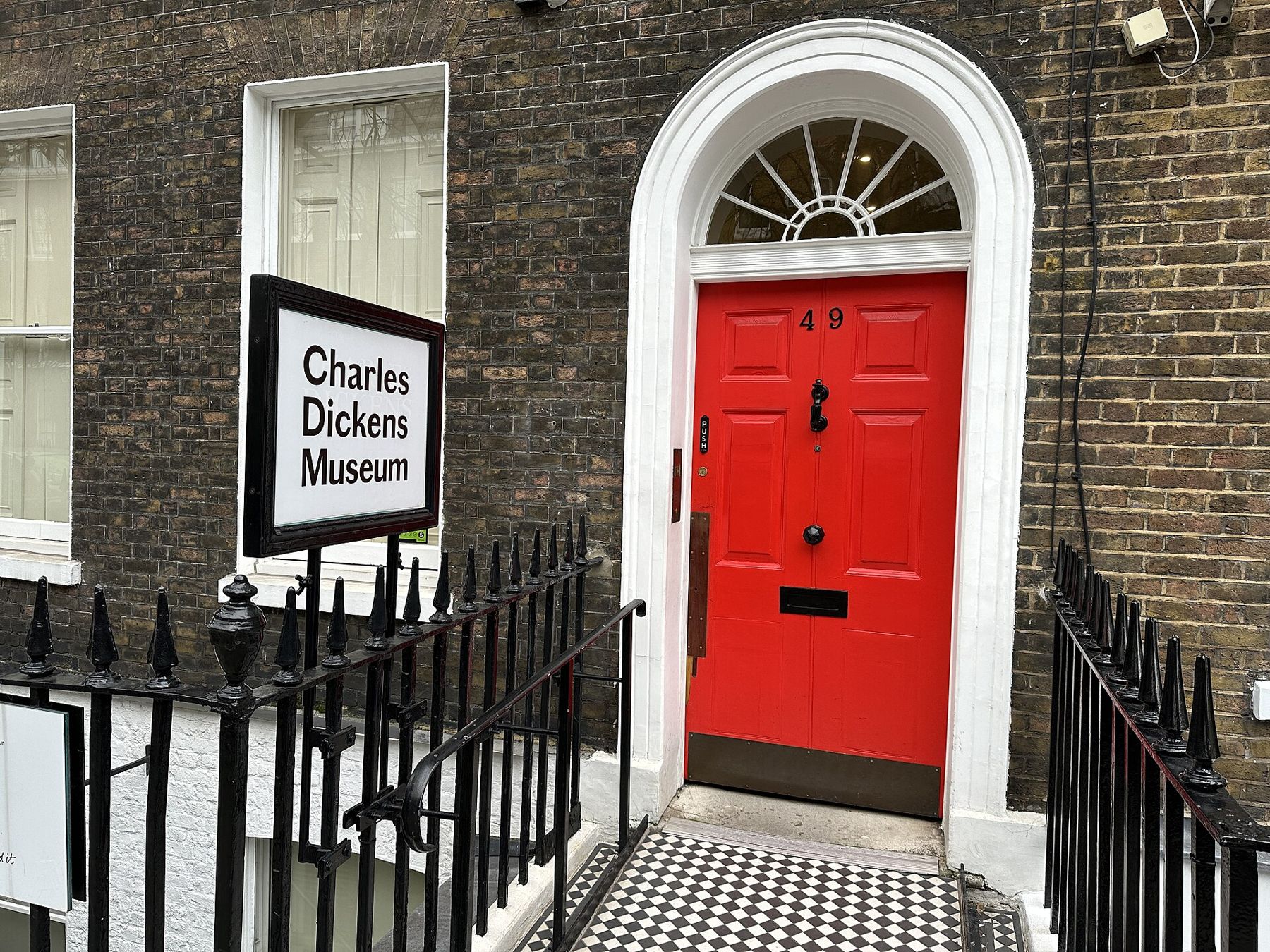
The Charles Dickens Museum on Doughty Street
London, England
The only surviving London family home of Charles Dickens, where he finished Pickwick and wrote Oliver Twist. A tall Georgian terrace house, room by room, in one unhurried hour.
- About an hour
- Paid entry; some reductions
- First: The study on the first floor
Same room: Sir John Soane's Museum · The Wallace Collection
When the doors are free · Every label in one list
Best months Autumn and early winter · Getting there Walk from Russell Square or Chancery Lane · Bring A Dickens novel you half remember
Charles Dickens moved into 48 Doughty Street in 1837 with his young wife Catherine and their first child, and stayed for about two and a half years. He was in his mid twenties and suddenly famous. In this house he finished The Pickwick Papers, wrote Oliver Twist and Nicholas Nickleby, and moved from promising writer to the best known author in the country. Of his many London addresses, this is the only family home that survives, and it is now a museum set out as it might have looked in those years.
It is a narrow Georgian terrace house, four floors and a basement, so the visit is vertical: you climb, room by room, from kitchen to nursery. An hour is generous enough to read the labels and look out of the windows.
A Bloomsbury street that has barely changed
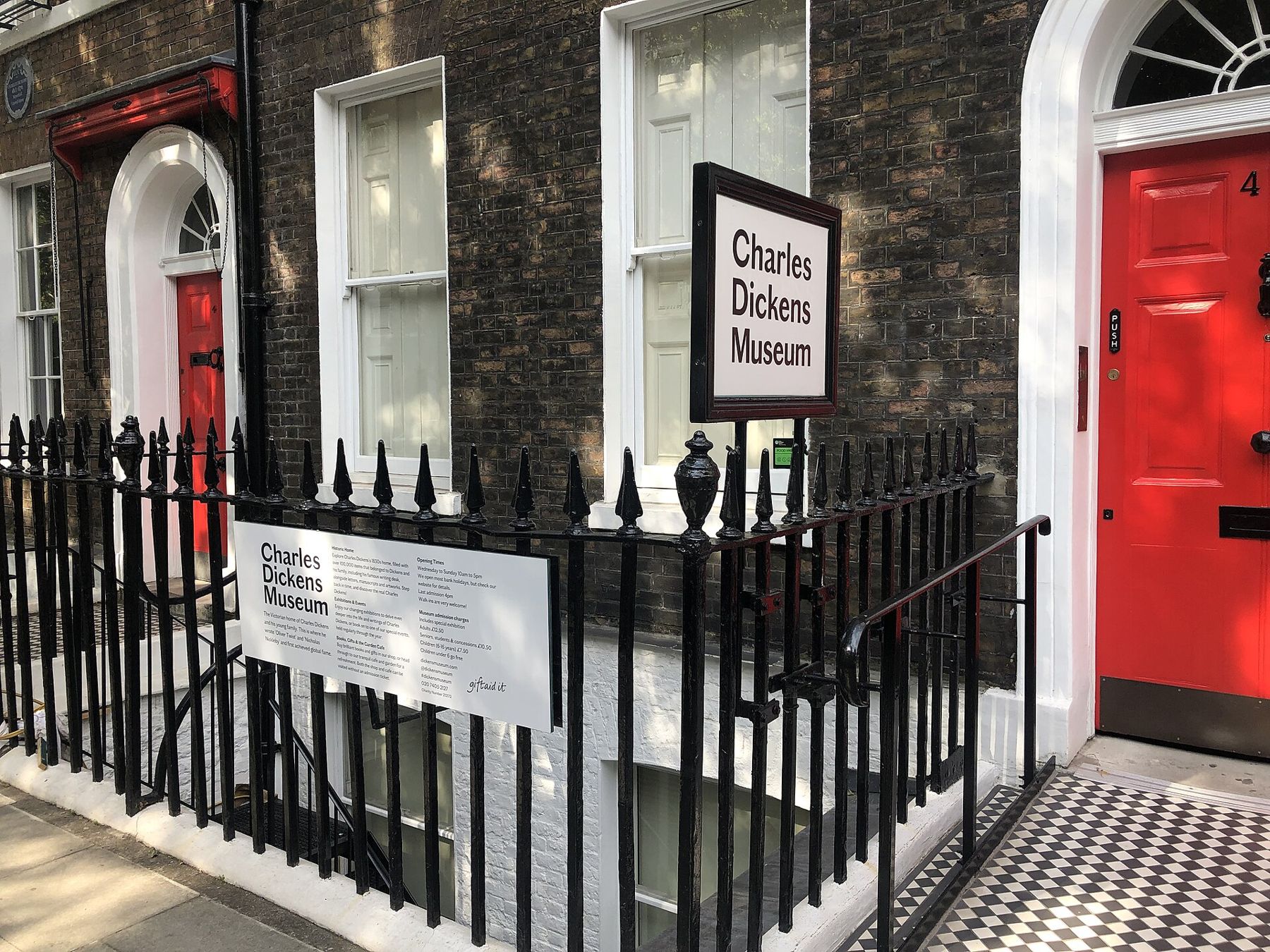
Doughty Street is one of the better preserved Georgian streets in Bloomsbury, wide and quiet, with brick fronts, fanlights over the doors and iron railings along the basement areas. Walk its length before you go in. The street gives you the scale of the life Dickens had here: respectable, comfortable, and a long way from the debtors' prison his father had known.
The nearest green space is Coram's Fields to the north, on the site of the Foundling Hospital, which Dickens knew well. Russell Square and its gardens are a few minutes west. Either makes a good place to sit before or after the visit.
Kitchen and wash house below stairs
Most visits begin at street level, but it is worth going down first if the route allows. The basement kitchen and wash house show the labour that kept a house like this running: a range, copper pans, stone floors and the servants' quarters. Dickens wrote often about kitchens and those who worked in them, and the rooms help you read those scenes differently.
The dining room on the ground floor is set for a meal. Dickens was a sociable host, and this is where he entertained friends, among them the actor William Macready and his future biographer John Forster. The table setting is a reconstruction, but the scale of the room is real, and it is easy to imagine it crowded, loud with talk and with Dickens at the centre of it. Across the hall, the smaller morning room shows how the family lived on ordinary days, with portraits and prints that help you put faces to the names in the letters.
The study where Oliver Twist was written
The first floor holds the drawing room and, at the back, the study. This is the room to give the most time. Dickens wrote here at speed, in monthly parts, with printers waiting for copy, and the window looks over the small garden at the back. A desk from later in his life is displayed here, and manuscripts, letters and early editions are shown in cases that change from time to time.
Look for the reading copies and the material on his public readings, which became a second career and a great strain on his health in later years. The drawing room next door, with its pale walls and piano, is where the family gathered in the evenings.
No. 01 · Next roomSir John Soane's MuseumLondon, England · About an hourMary Hogarth's room and the family upstairs
On the second floor is the bedroom of Mary Hogarth, Catherine's younger sister, who lived with the family. In May 1837, only weeks after the move, she fell ill after an evening at the theatre and died here the next day, at seventeen. Dickens was devastated. He wore her ring for the rest of his life and her death fed into several of his young heroines. The room is presented quietly, and it is right to slow down here.
The nursery and the family bedrooms above are smaller and plainer. The display on the children, and on Catherine's long and unhappy marriage, which ended in separation years later, gives a fuller picture of Dickens than the one his fame usually allows.
Sixty minutes, floor by floor
- Five minutes on Doughty Street, looking at the front.
- Ten minutes in the basement kitchen and wash house.
- Ten minutes in the dining room and the morning room.
- Twenty minutes in the study and drawing room.
- Fifteen minutes on the upper floors, ending in Mary Hogarth's room.
What you can leave: the temporary exhibition rooms are worth a look if the subject appeals, but they can wait for a second visit. The small garden at the back is pleasant on a fine day and needs only a few minutes.
When to come and what it costs
Entry is paid, with reductions for some groups, and opening days and arrangements change through the year, so check before you go. The house is narrow and the staircase is the only way between floors in parts of the building, so visitors with limited mobility should check access in advance. Weekday mornings are usually the calmest.
The museum often marks Christmas with seasonal displays, which suits a house so closely linked with A Christmas Carol, though that book was written later and elsewhere. Autumn and early winter, when the street lamps come on early, suit the house best.
From here, a walk south through Holborn brings you to Lincoln's Inn Fields and Sir John Soane's Museum, a very different London house, crowded with casts and lit from above. To the west, past Oxford Street, the Wallace Collection fills a whole mansion with paintings and armour.